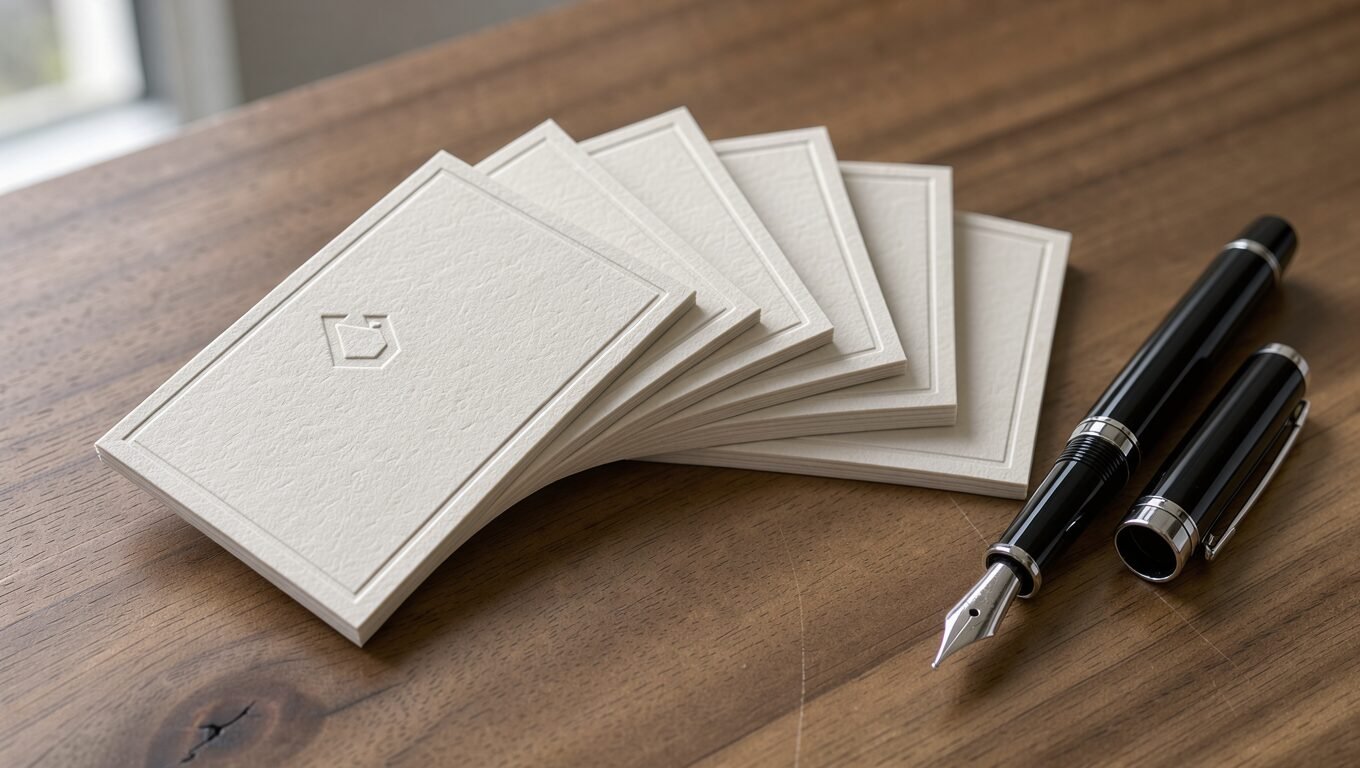
Lake Forest runs on introductions. Market Square conversations, a referral at the Deer Path Inn, a handshake after a Lake Forest Day event — and in every one of those moments somebody reaches for a card. In a town where reputation travels fast, the card is the first physical thing a prospect holds that says who you are.
This guide covers what still works in business card design and printing in 2026, the specifications that keep a job from being reprinted, and how we handle cards for Lake Forest and North Shore businesses from concept to the box on your desk.
Why a card still matters on the North Shore
Digital contact sharing exists, and it has its place. But the North Shore’s professional economy — wealth advisors, estate attorneys, interior designers, contractors, dentists, boutique retailers — still trades on face-to-face trust. A well-made card does three jobs: it makes you memorable, it signals the level you work at, and it carries the one next step you want the person to take (call, visit, scan).
A flimsy card from an online template does the opposite. People notice thin stock the way they notice a weak handshake.

Design: what belongs on the card (and what doesn’t)
- One name, one role, one phone, one email, one web address. If you need to list six services, you need a brochure, not a crowded card.
- The logo at a size that prints cleanly. Fine lines under about 0.25 pt and tiny reversed-out type disappear on press. We check this before the file goes anywhere.
- White space. Premium brands leave room. Margins of at least 3/16 inch keep text clear of the trim.
- A QR code only if it goes somewhere useful — a booking page, a portfolio, a Google review link — and only if you test it on the printed proof.
- Back side used, not wasted. A pattern, a tagline, a map of the service area, or simply the logo mark. Blank backs look unfinished on heavy stock.
Paper and finishes that read as “established”
Stock and finish are where the budget shows. The choices we recommend most often for North Shore professionals:
- 16 pt – 32 pt cover stock. Standard premium is 16 pt; 32 pt “thick” cards with a painted edge are a favorite for designers, builders and advisors.
- Uncoated or soft-touch. Uncoated cotton stock feels natural and takes notes in pen; soft-touch laminate feels velvety and resists scuffs.
- Letterpress or deboss for a single element — the logo or initials. It costs more and it is noticed.
- Spot UV or foil used sparingly, on one element, in a brand color. All-over gloss reads as cheap.
- Rounded corners for hospitality and consumer brands; square corners for law, finance and architecture.
Print specifications that prevent a reprint
Most card disasters come from the file, not the press. Our print-ready checklist:
- Final size 3.5 × 2 inches with 0.125-inch bleed on every side (file size 3.75 × 2.25).
- CMYK color mode, with Pantone references for foil or spot colors; rich black (60/40/40/100) for solid areas, 100 K for small text.
- 300 dpi minimum for any raster image; logos as vector (AI, EPS or PDF).
- Fonts outlined or embedded; PDF/X-1a export.
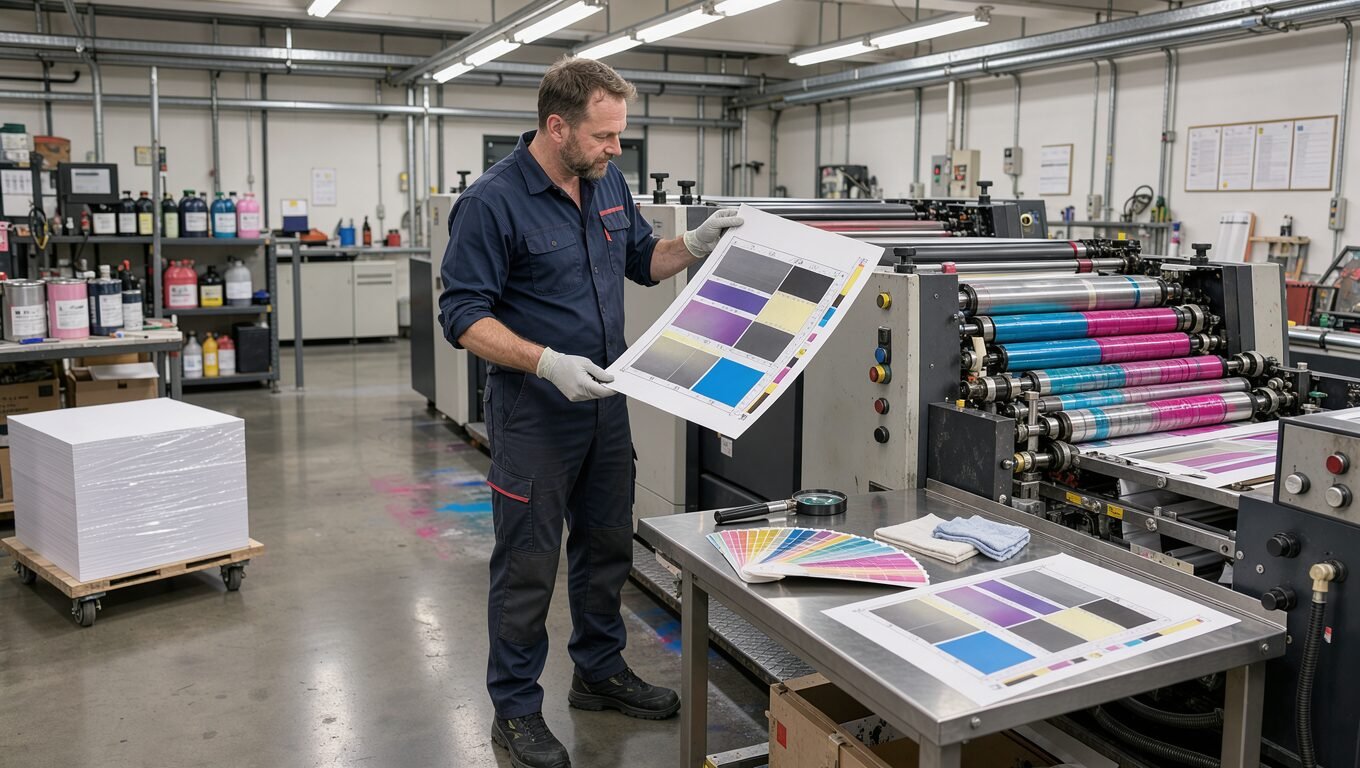
- A printed proof — or at minimum a calibrated digital proof — approved before the run.
If you only have a JPEG of your logo, that is the first thing to fix. Our logo design team can rebuild it as vector artwork so it prints sharp at any size.
Quantities, timelines and local delivery
For a single professional, 250–500 cards covers a year. Teams and retail counters usually run 1,000 per person or per location. Standard digital runs take three to five business days; letterpress, foil and painted edges take seven to ten. We coordinate production with trusted print partners and deliver to Lake Forest, Lake Bluff and the surrounding North Shore.
Matching the card to the rest of your brand
A card is one piece of a system. The same logo, color values and typography should appear on your letterhead, email signature, website header and storefront sign. If those don’t match today, it’s worth fixing all of them at once — see our brand collateral service and our note on building a brand identity for a small business.
How we work with Lake Forest businesses
We design the card, prepare the print-ready files, manage the printer, check the proof and hand you the finished boxes. For businesses that also need digital reach, our Lake Forest digital marketing team keeps the same brand consistent online. Start with a free marketing audit and we’ll look at every place your brand shows up — including the card in your pocket.
Frequently asked questions
How much do premium business cards cost in Lake Forest?
It depends on stock, finish and quantity; a run of 500 on 16 pt stock is modest, while 32 pt letterpress with painted edges costs several times more. We quote per project after a short brief.
Can you print from a design I already have?
Yes, as long as the file meets print specs — bleed, CMYK, 300 dpi, outlined fonts. If it doesn’t, we fix the file first so the run comes out right.
How long does design and printing take?
Design takes two to five business days depending on revisions; printing three to ten business days depending on the finish.