Most Deerfield small businesses don’t have a bad brand. They have half a brand: a logo from years ago, a website built by someone else, a sign in a slightly different blue, invoices in Arial and a van with the old phone number. Each piece was fine on its own. Together they tell customers nobody is quite in charge.
A brand identity system fixes that once. Here’s what it contains, how to roll it out across print and digital, and how to keep it consistent after launch.
What a complete identity includes
- Logo system: primary lockup, stacked version, the mark alone, one-color and reversed versions — all as vector files.
- Color palette: two to three brand colors plus neutrals, each specified in Pantone, CMYK, RGB and hex so print and screen match.
- Typography: one headline face, one body face, and the system-font fallbacks for email and documents.
- Imagery direction: the photo style (real people, natural light, your actual space) and what to avoid.
- Voice: three or four words that describe how you sound, with a short example of each.
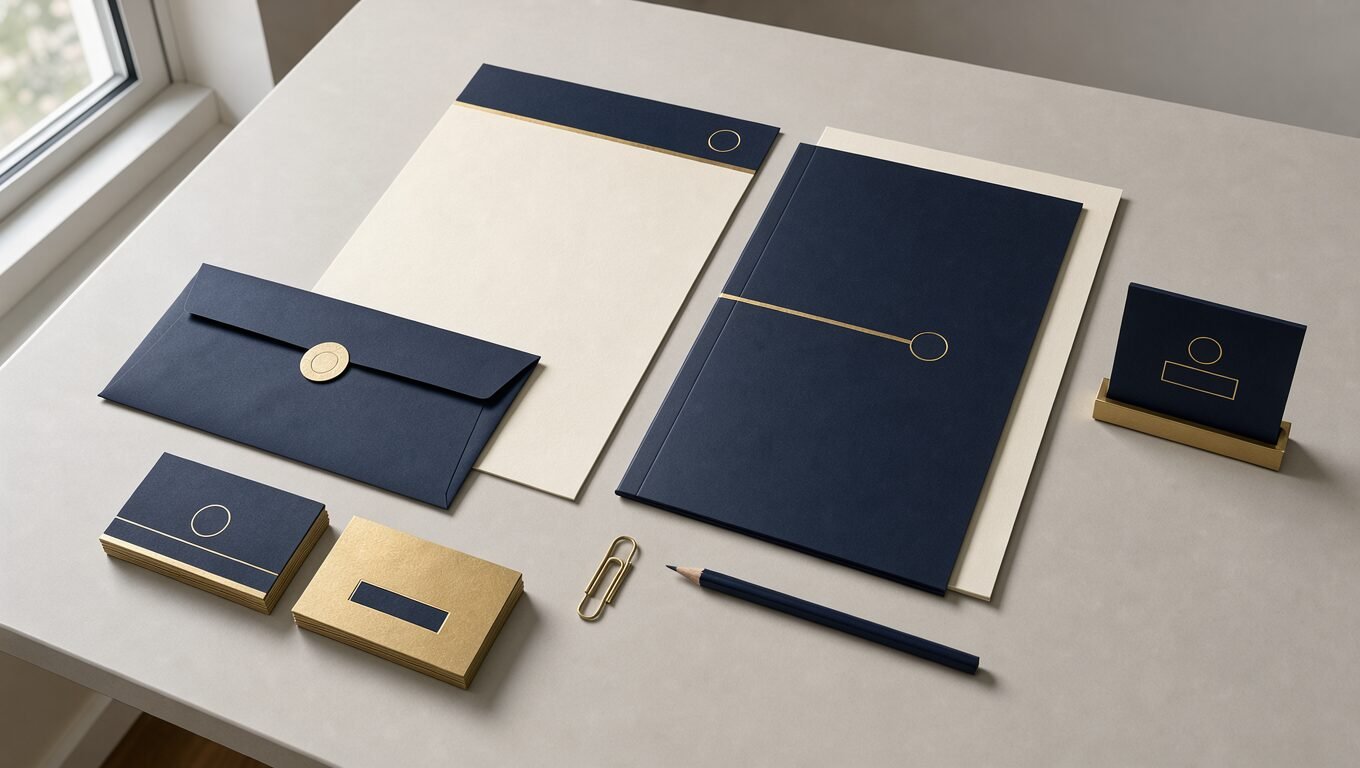
- Templates: business card, letterhead, envelope, invoice, email signature, social profile set, proposal cover.
- A one-page guideline anyone — a printer, a sign shop, a new hire — can follow.

The rollout order that saves money
- Digital first: website, Google Business Profile, social profiles, email signatures. Fast, cheap, highest visibility.
- Everyday print: business cards, letterhead, invoices, folders. See our brand collateral service.
- Customer-facing print: brochures, menus, price lists, packaging.
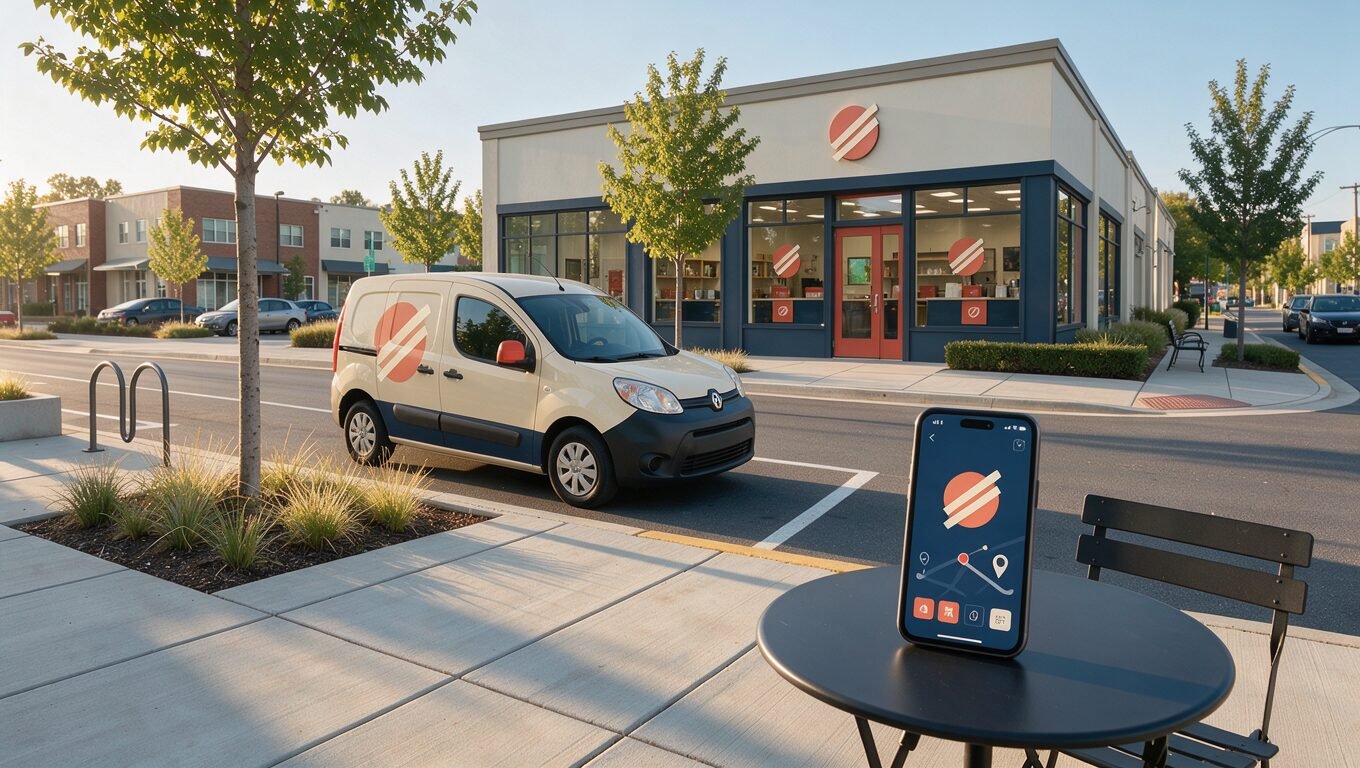
- Environment: storefront sign, interior graphics, window vinyl — see the Northbrook signage guide.
- Vehicles and uniforms: the longest-lasting pieces, so do them last with a finalized system.
Running the sign before the logo is final — a surprisingly common sequence — is how businesses end up with two blues.
Deerfield-specific considerations
Deerfield’s customer base is a mix of corporate commuters along Lake Cook Road, families in the neighborhoods and shoppers at Deerfield Square. A brand that looks established and calm tends to win here; loud discount styling reads as out of place. If you serve both Deerfield and Chicago, make sure the identity doesn’t lean so suburban that it looks small downtown.
Keeping it consistent after launch
- Store the master files in one shared folder with a read-only guideline PDF; give printers and sign shops that folder, not a JPEG from an email.
- Appoint one person who approves any new printed piece.
- Audit twice a year: website, listings, vehicles, signs, print stock. Fix drift immediately — it compounds.
What to budget for
Identity projects scale with how many pieces need templates and how much existing material has to be replaced. The cost that matters is the one you avoid: reprinting signs, vans and stock because the logo changed after they were produced. Plan the system first, then produce.
Start with an audit, not a logo
Before redesigning anything, we audit every place your brand appears and show you what’s inconsistent and what it’s costing you. Request a free marketing audit, or read about our branding and brand identity services.
Frequently asked questions
How long does a brand identity project take?
Six to ten weeks for identity and core templates; rollout across print, signage and vehicles continues over the following months.
Do I need to change my logo to fix my brand?
Not always. Many businesses keep the logo and fix colors, typography, templates and photography — consistency is the bigger win.
What should I give my printer or sign shop?
Vector logo files, the Pantone and CMYK color values, the typeface names and the one-page guideline. Never a screenshot.