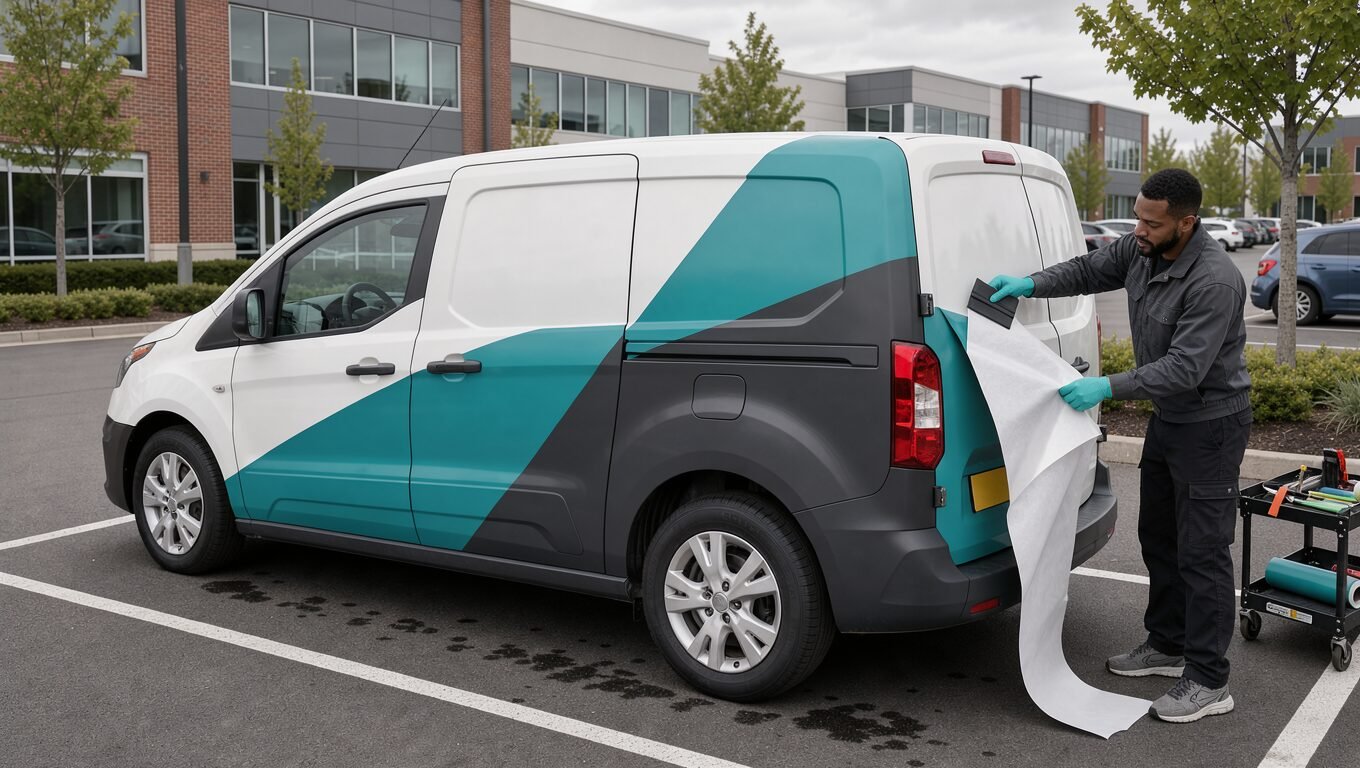
A wrapped van in Skokie passes thousands of people a day on Skokie Boulevard, Dempster, Touhy and the Edens — and then sits in a customer’s driveway where the neighbors see it. For HVAC, plumbing, electrical, cleaning, landscaping, delivery and medical-courier businesses, the vehicle is the biggest sign you own and the only one that goes to the customer.
Here are the design rules we use for wraps and fleet graphics so the vehicle is readable at speed, consistent with the rest of the brand, and still looks right three years in.
Full wrap, partial wrap or decals?
- Full wrap: every panel covered. Maximum impact, protects the paint, highest cost. Best for brand-new vehicles and businesses where the vehicle is the storefront.
- Partial wrap: a designed graphic across the rear and lower sides on the vehicle’s own paint color. Most of the impact at roughly half the cost; the standard choice for small fleets.
- Cut-vinyl decals: logo, phone, web address and a service list. Budget option that still looks professional when the layout is designed rather than improvised.
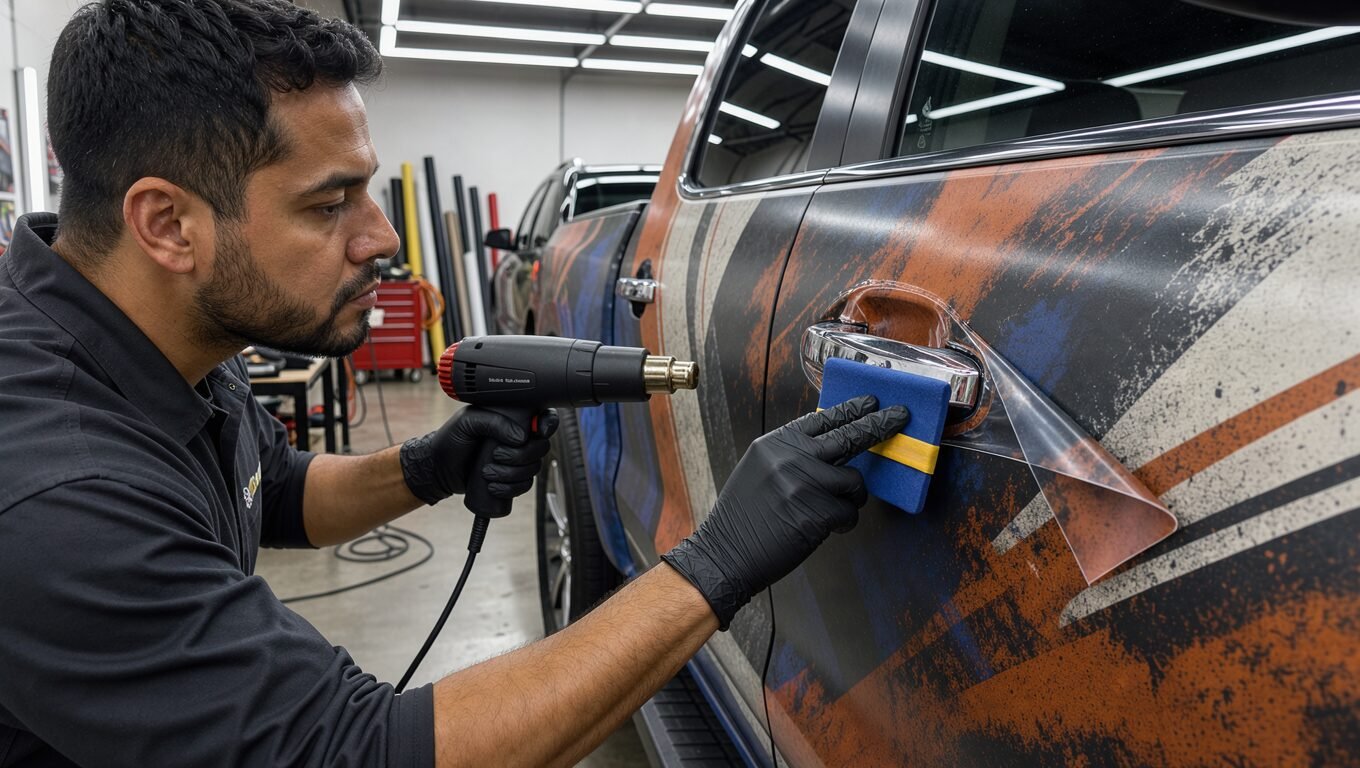
Readability at 45 mph
- Three things, in this order: what you do, the company name, the phone number or web address. If someone catches only one, it should be what you do.
- Letter height: phone and web at 4 inches minimum on the rear doors; the service descriptor larger.
- Contrast: dark on light or light on dark, no mid-tone text on photographic backgrounds.
- The rear is prime: drivers stare at it in traffic. Put the phone, the web address and one benefit there.
- No clutter: a list of fourteen services is unreadable; “Heating · Cooling · Plumbing” is enough.
Design to the vehicle template
Every make and model has a vector template showing door handles, seams, mirrors, fuel doors and curves. Design on it, keep text away from handles and seams, and preview on a 3D mockup before anything is printed. We also check the design against Skokie and Illinois rules on reflective materials and window coverage — rear side windows can carry perforated film; the windshield and front side windows cannot.
Materials and lifespan
Cast vinyl with a matching laminate lasts five to seven years in the Chicago freeze-thaw cycle; calendared vinyl is cheaper and shrinks and cracks sooner. Specify UV laminate for color stability and hand-washing instructions for drivers. A good installer provides a workmanship warranty — ask for it in writing.
Fleet consistency
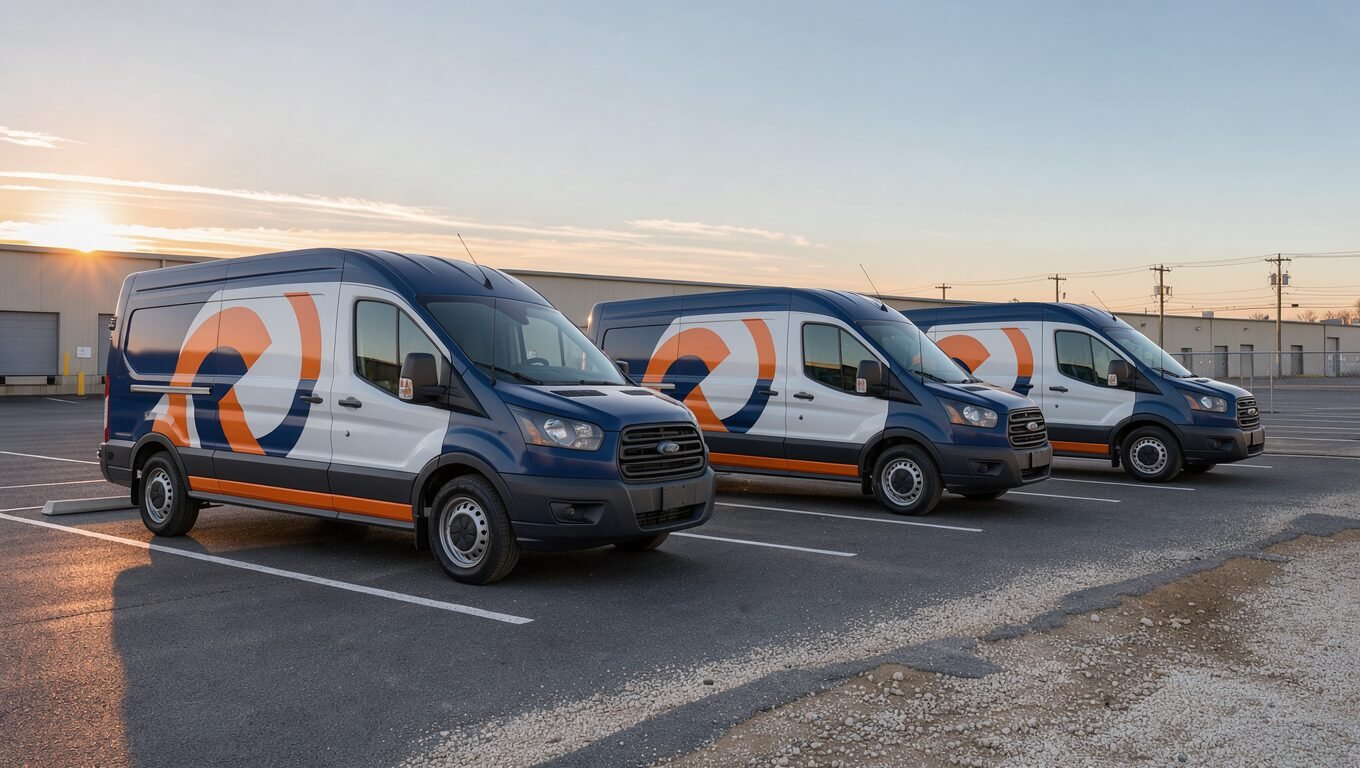
Design one system that adapts to sedans, vans and box trucks so the fleet reads as one company. Use the same logo lockup, colors matched to your Pantones in vinyl, and the same phone and web address in the same positions. This is where the brand identity work pays for itself.
Design, proof and install coordination
We design the wrap on the correct template, produce a 3D proof, specify materials, and coordinate with a certified wrap installer. The same artwork feeds your signage, uniforms and website — see branding and brand collateral. Want to know how your trucks, site and listings work together? Request a free marketing audit.
Frequently asked questions
How long does a vehicle wrap last?
Quality cast vinyl with laminate typically lasts five to seven years with normal care; cheaper calendared films fail sooner in Chicago winters.
What should a service van wrap include?
The service you provide, the company name, one phone number and one web address, placed so the rear and sides each tell the story on their own.
Can you match my existing logo colors in vinyl?
Yes — vinyl is specified to the closest match of your Pantone values and confirmed with physical samples before production.