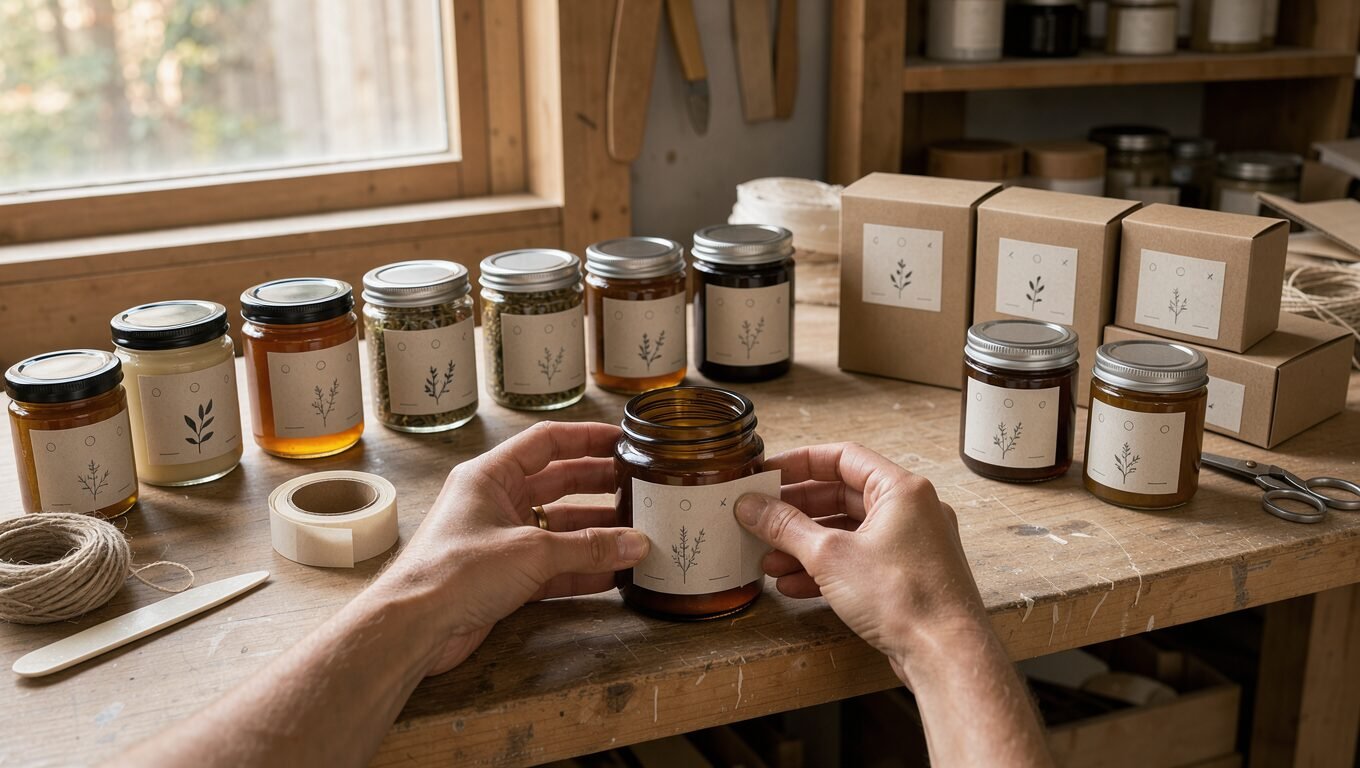
Libertyville has a quietly strong maker economy: specialty foods and sauces, candles and skincare, coffee roasters, boutique retailers on Milwaukee Avenue, and small manufacturers in the industrial corridors along Route 176 and Peterson Road. For all of them the package is the product’s first salesperson — on a shelf at a farmers market, in a gift shop, or in a shipping box that arrives at a customer’s door.
Here’s how we approach packaging and label design so it sells, complies, and prints without surprises.
Start with how the product is sold and shipped
A jar sold at a local market needs a label that reads at arm’s length and survives condensation. A subscription box needs an unboxing moment and a structure that protects contents in a delivery van. A retail product needs a face panel that competes on a crowded shelf. Decide the primary channel first; the structure, materials and label hierarchy follow from it.
The label hierarchy that sells
- Brand — recognizable at a glance, consistent with your website and signage.
- What it is — in plain words (“Small-batch hot honey”), larger than you think.
- Why this one — one differentiator: local, organic, handmade, a flavor cue.
- Required information — net weight, ingredients, allergens, address, warnings, barcode.
Regulatory basics (verify for your category)
Packaged food sold in Illinois must meet FDA labeling rules — product identity, net quantity, ingredient list in descending order, allergen declaration, name and place of business, and a nutrition panel unless exempt. Cottage-food producers have their own state requirements, including specific disclosure statements. Cosmetics, candles and supplements have separate rules. We design with the required elements placed correctly, but the compliance decision is yours and your regulator’s — confirm requirements with the Illinois Department of Public Health or the relevant agency before printing a large run.
Materials and print methods
- Labels: white BOPP (waterproof, for jars and bottles), kraft paper (natural look, indoor products), clear film (no-label look). Laminate or varnish for anything handled or refrigerated.
- Folding cartons: SBS paperboard with a matte or soft-touch finish; spot UV on the logo for shelf pop.
- Shipping boxes: corrugated with one- or two-color flexo printing outside, full-color on the inside lid for the unboxing.
- Small runs: digital label printing has no plate cost and allows multiple flavors in one order — ideal below a few thousand pieces.
Specs that prevent waste
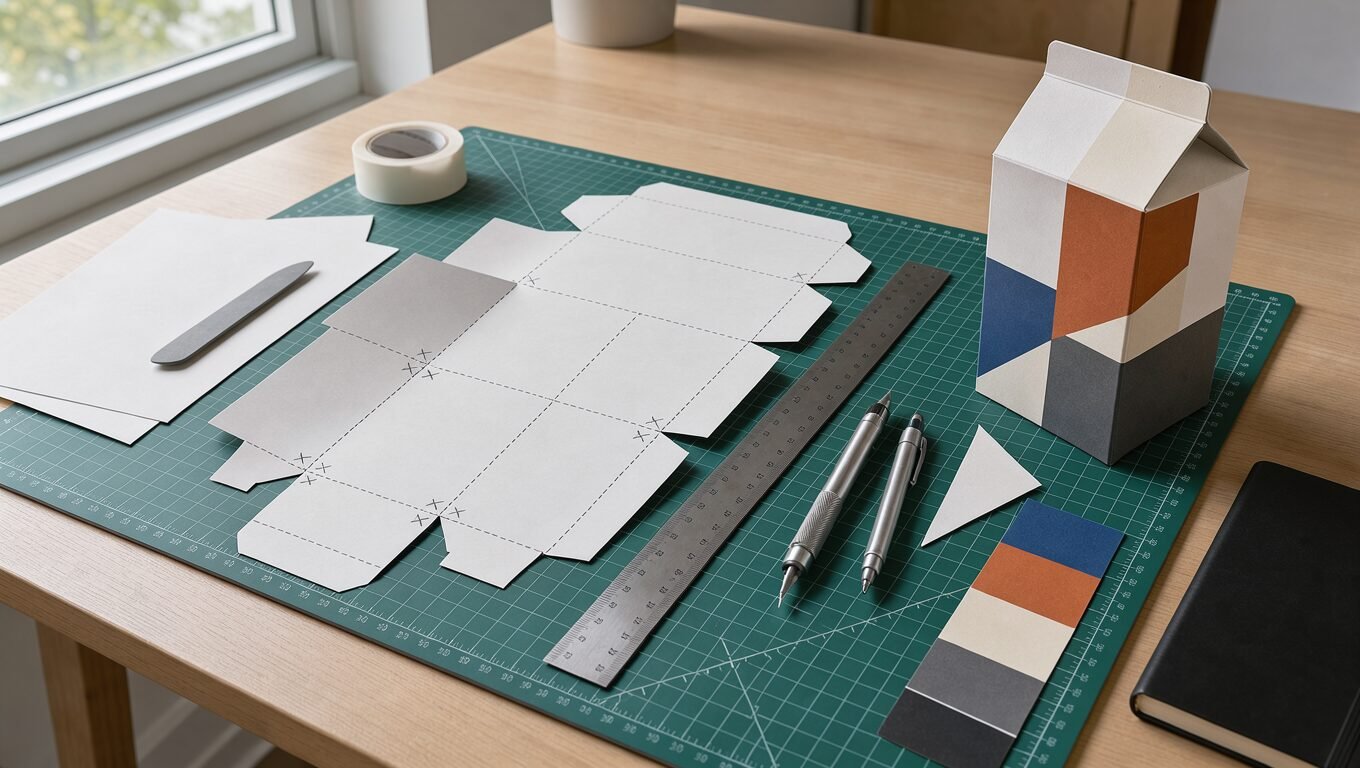
- Design on the supplier’s dieline; keep text 0.125 inch from cuts and folds; add bleed on every edge.
- CMYK plus Pantone for brand colors; white underprint on clear or kraft materials.
- Barcodes at the correct size and quiet zone; test-scan a printed sample before approving.
- Order a physical proof or press sample for any new material — screens lie about kraft and metallic finishes.
Make the range look like a family
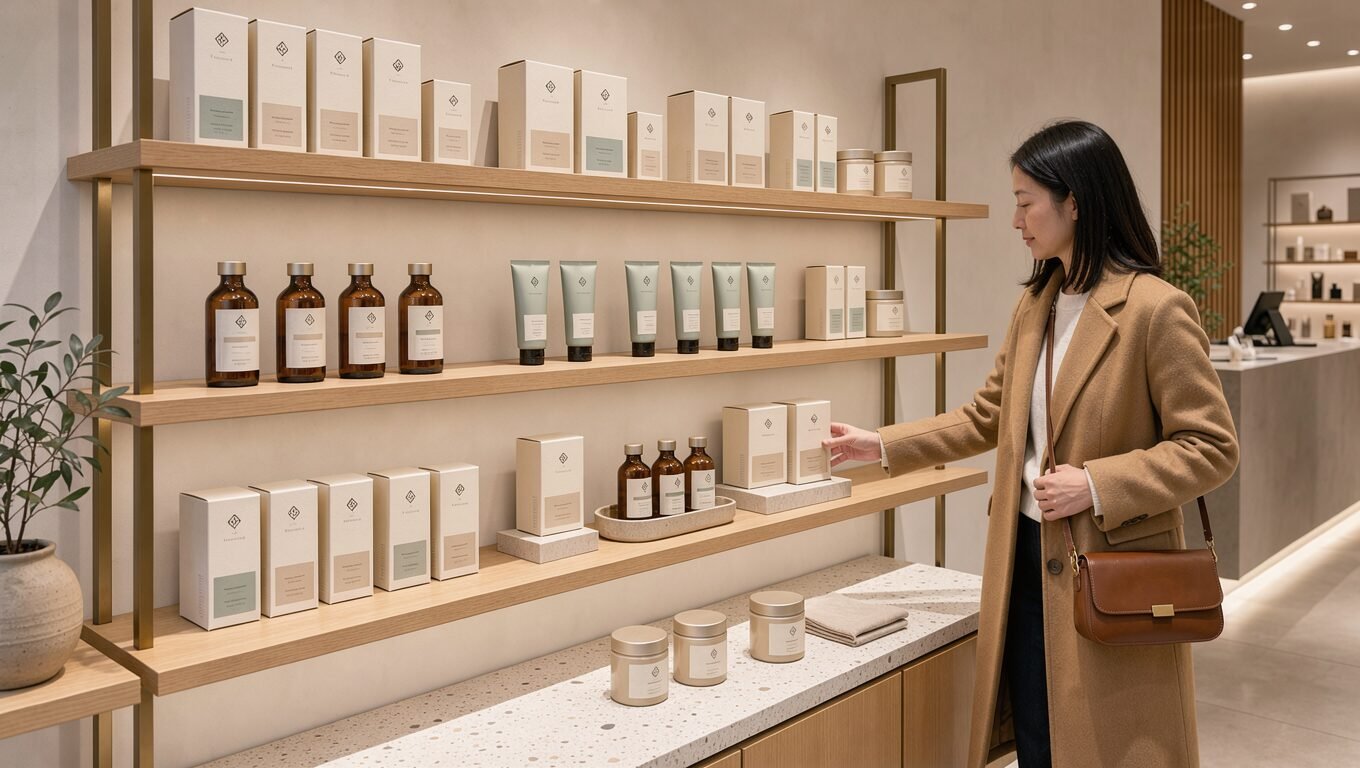
Once there are three flavors or product lines, a system matters: fixed logo position, a color band or illustration that changes per variant, identical type sizes. Shoppers find the one they want and recognize the brand across the whole shelf. This is the same thinking behind a full brand identity.
Design, proofs and print coordination
We design the packaging and labels, build print-ready files on the correct dielines, source materials through our print partners, and manage proofs through delivery in Libertyville and across Lake County. If your product also needs to sell online, our e-commerce team builds the store to match the package. Start with a free marketing audit and we’ll review your current packaging alongside your website and listings.
Frequently asked questions
What is the minimum order for custom labels?
Digital label printing starts at a few hundred pieces with no plate charges, which suits makers testing a new product.
Can you design packaging that meets food-labeling rules?
We place all required elements correctly and in legible sizes, but you confirm the specific requirements for your product with the regulator before a large print run.
Should my labels be waterproof?
If the product is refrigerated, used in a kitchen or bathroom, or sold outdoors, yes — BOPP film with a laminate is the usual choice.