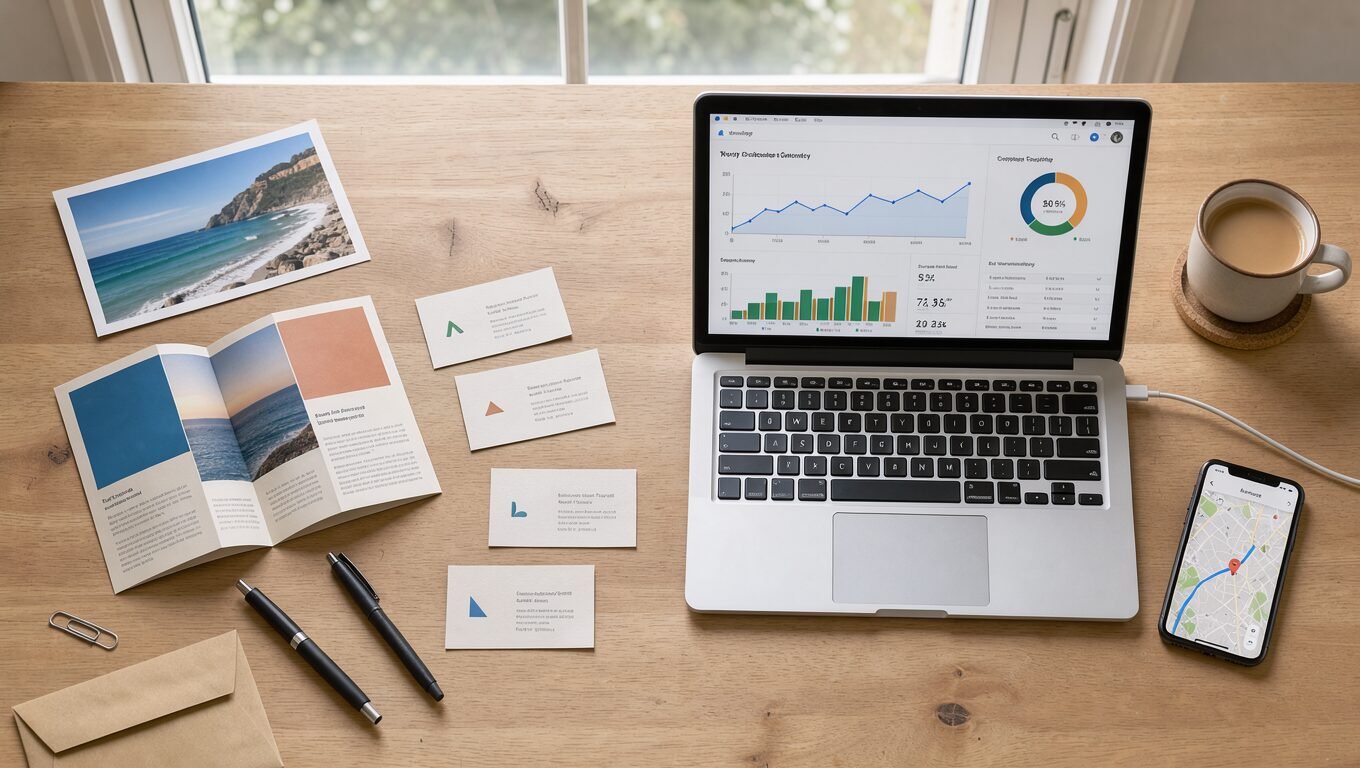
Ask ten North Shore business owners whether print still works and you’ll get ten confident, contradictory answers. The honest answer is that print and digital do different jobs, and the businesses that grow from Evanston to Lake Forest run both from one brand and one budget — they just put each channel where it wins.
Here’s a plain comparison for the kinds of businesses we work with on the North Shore, followed by a simple way to split the budget.
Where print wins
- Reaching every household on a street. Direct mail to carrier routes in Wilmette or Glencoe reaches affluent homeowners who don’t click ads and skip social media. No algorithm decides who sees it.
- Permanence and trust. A brochure stays on the counter; a listing book stays on the coffee table; an engraved card says “established” in a way a LinkedIn profile can’t.
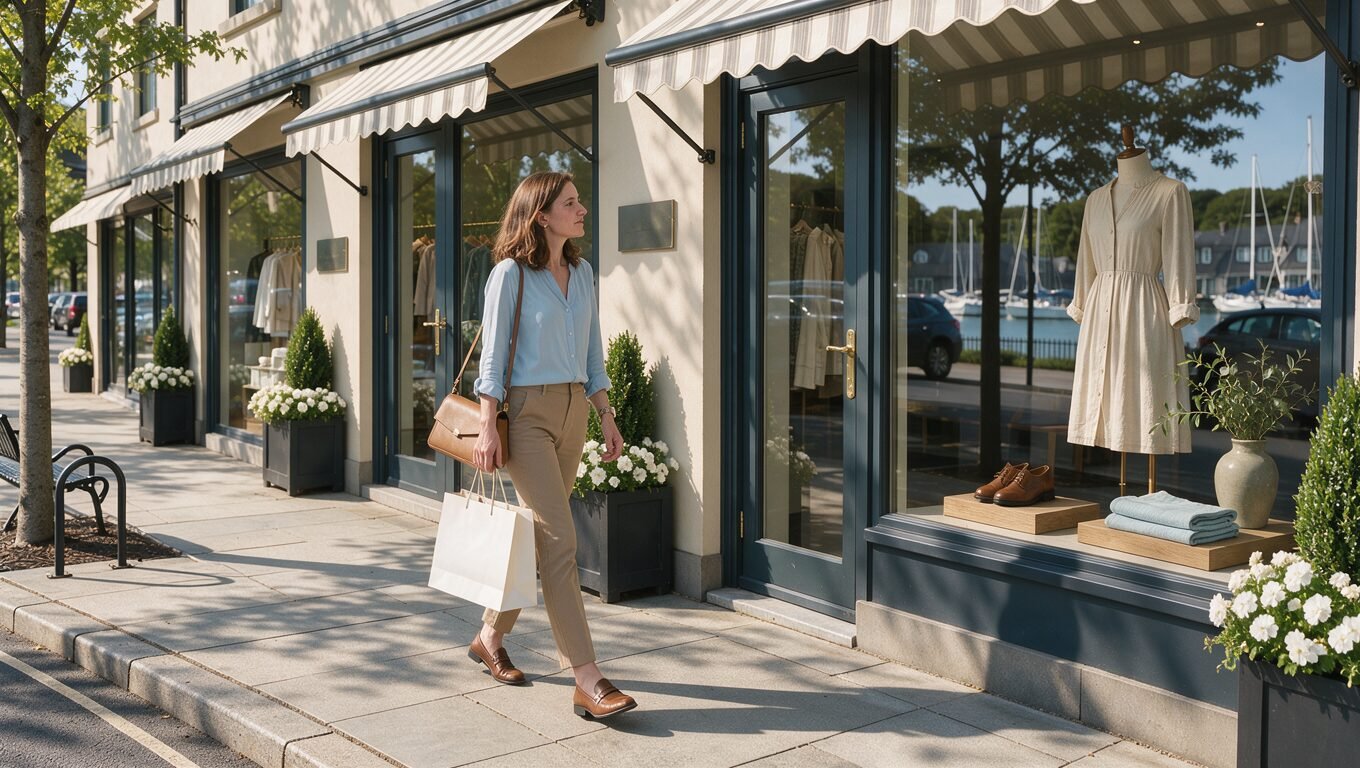
- Local presence. Storefront signage, window graphics, vehicle wraps and event banners are seen by people who are physically nearby — the customers most likely to walk in.
- High-ticket, relationship sales. Estate planning, remodeling, private schools, luxury real estate and medical specialties still close with something physical in hand.
- Older and busier demographics who read mail and ignore inboxes.
Where digital wins
- Capturing intent. When someone searches “orthodontist Northbrook” or “wedding limo Chicago,” only search — organic and paid — is there at that moment. See our SEO and paid advertising services.
- Reputation. Reviews on Google decide more North Shore purchases than any brochure; managing them is a digital job.
- Speed and testing. Change a headline in an hour, test two offers in a week, pause what doesn’t work.
- Measurement. Calls, forms, bookings and revenue tied to a source.
- Reach beyond the neighborhood — for businesses that serve all of Chicagoland or ship nationally.
Where they work together
The strongest North Shore campaigns pair the two: a postcard with a QR code to a landing page; a yard sign that matches the Google Business Profile photos; a brochure that points to a review page; retargeting ads shown to people after they’ve seen the mailer. The brand must be identical across both or the handoff breaks — the reason we build one identity system before either channel.

A simple budget split
- Service businesses with local search demand (dental, HVAC, legal, home services): roughly 70 percent digital (search, reviews, website), 30 percent print (signage, vehicles, direct mail to target routes).
- Retail, restaurants and events: closer to 50/50 — signage, menus and local mail matter as much as social and maps.
- High-ticket relationship businesses (real estate, wealth management, private schools): 60 percent digital for visibility and reputation, 40 percent print for the pieces that close.
Adjust after ninety days based on tracked results, not instinct.
Measure print like digital
Give every print piece a trackable path: a dedicated phone number, a short URL, a QR code, an offer code. Then compare cost per lead across channels in the same spreadsheet. Print often surprises people — in both directions.
One partner for both
We design and manage print and run the digital side from the same brand, so budgets move to whatever is working. Not sure how your current mix performs? A free marketing audit covers your website, listings, reviews and the print you already use. See our full North Shore service area.
Frequently asked questions
Is direct mail still effective in affluent suburbs?
Yes, when it is well designed, consistent and targeted to the right routes; it reaches homeowners who don’t engage with ads online.
Should a new business start with print or digital?
Digital first — website, Google Business Profile and reviews — then signage, then print pieces that support the sale.
How do I know if print is working?
Use unique phone numbers, URLs, QR codes and offer codes on every piece and compare cost per lead with your digital channels.