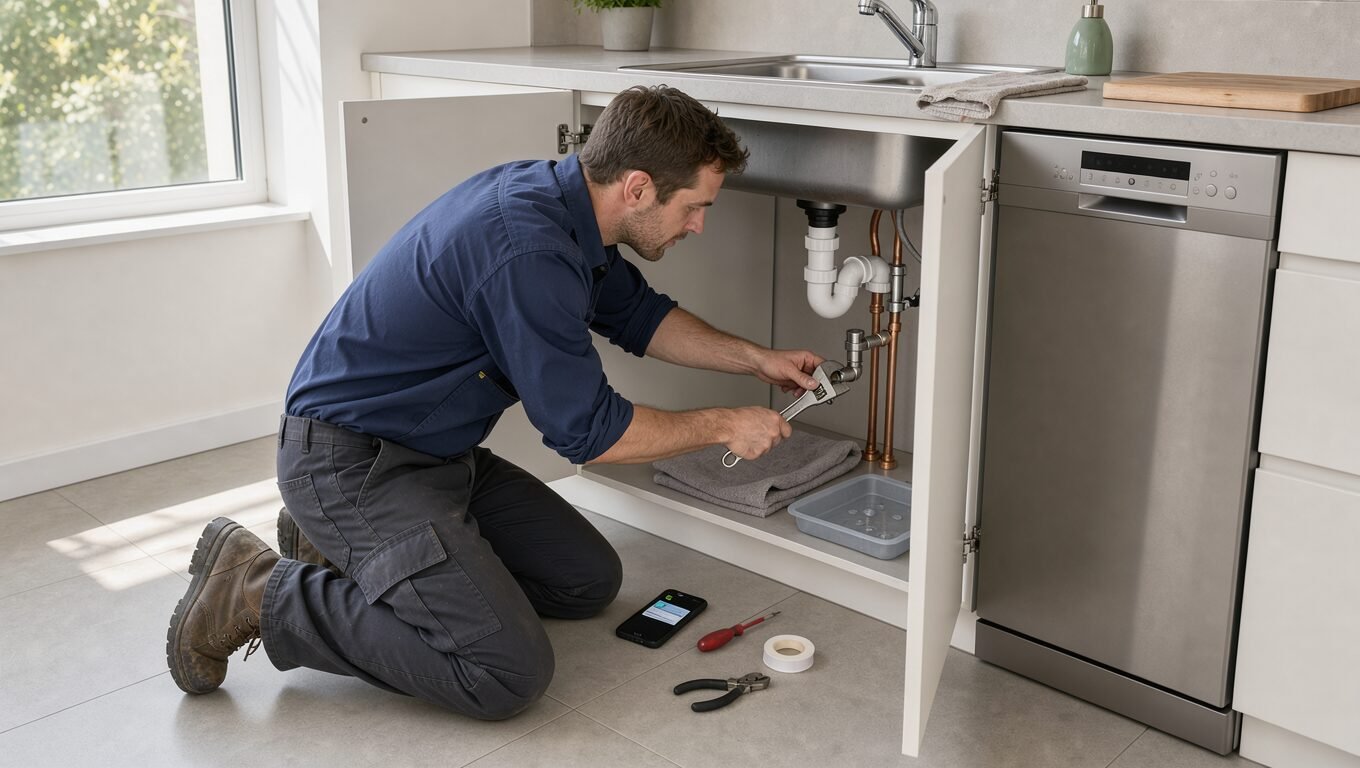
In the trades, the person who answers the phone is the person who gets the job. The trouble is that the person who knows the answers is usually in a crawlspace, on a roof or driving between calls. AI has quietly become the most useful hire a small home-services company can make — not to replace the office manager, but to make sure no call, text or web lead waits. Here is where it fits for HVAC, plumbing, electrical, roofing, landscaping and cleaning companies in the Chicago area.
1. Answer every call, every hour
An AI receptionist picks up on the second ring, collects the address, the problem, the urgency and the preferred window, checks your schedule and books or offers times. Emergencies (“no heat,” “water everywhere”) get flagged and routed to the on-call tech immediately. Everything else lands as a ticket with a transcript. During a cold snap when the phone rings nonstop, it takes every call at once. We cover the mechanics in our AI receptionist guide.
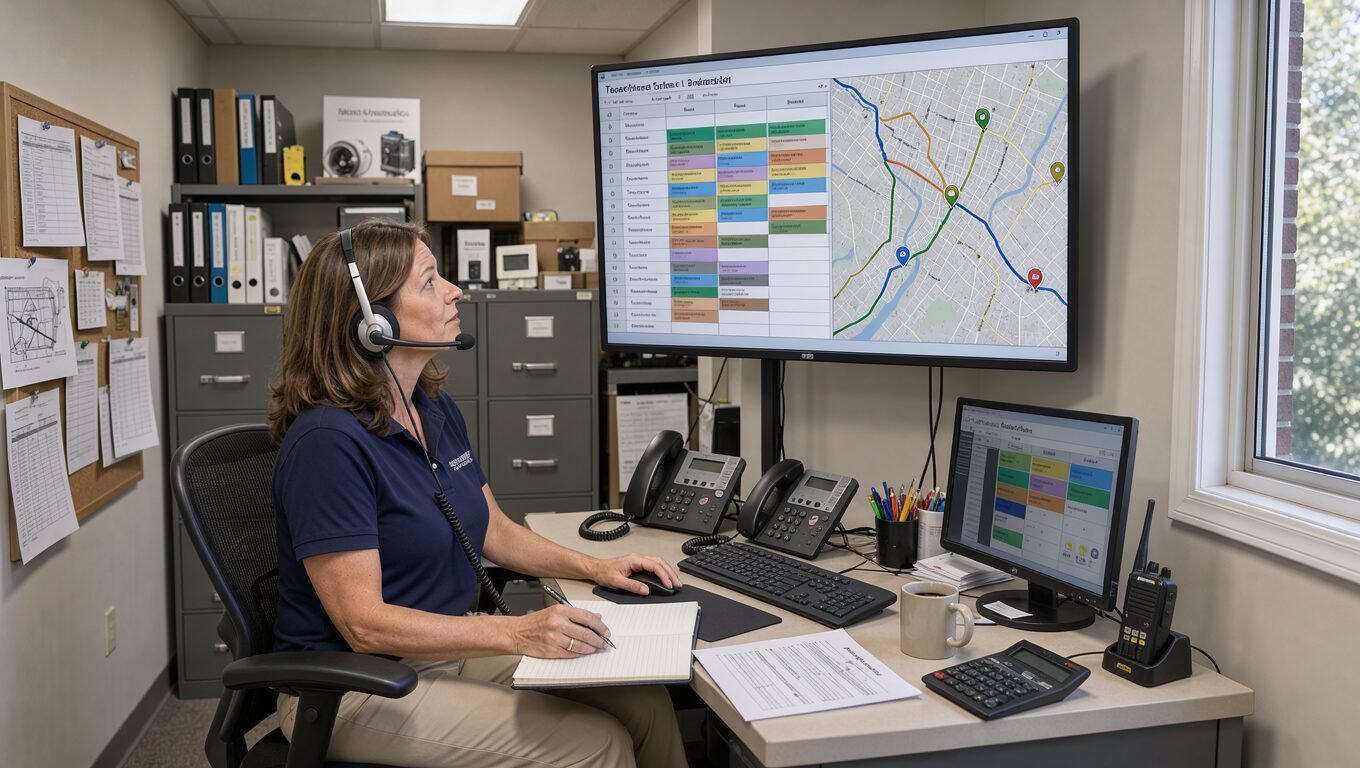
2. Qualify and price-range before dispatch
Good intake saves wasted trips. The assistant asks the questions your dispatcher would: system age and brand, whether it’s a repair or replacement, tenant or owner, service area, photos by text if helpful. It can quote approved diagnostic fees and ranges, and it won’t invent prices beyond what you’ve set. Out-of-area or out-of-scope requests get a polite referral instead of a technician’s afternoon. See AI lead qualification for the scoring side.
3. Follow up on every estimate
Most home-service companies lose more money on unaccepted estimates than on missed calls. An automated sequence — a text the next day, an email with financing options on day three, a call-back offer on day seven, stopped the moment the customer replies — recovers a meaningful share without anyone remembering to do it.
4. Reminders, on-my-way texts and reviews
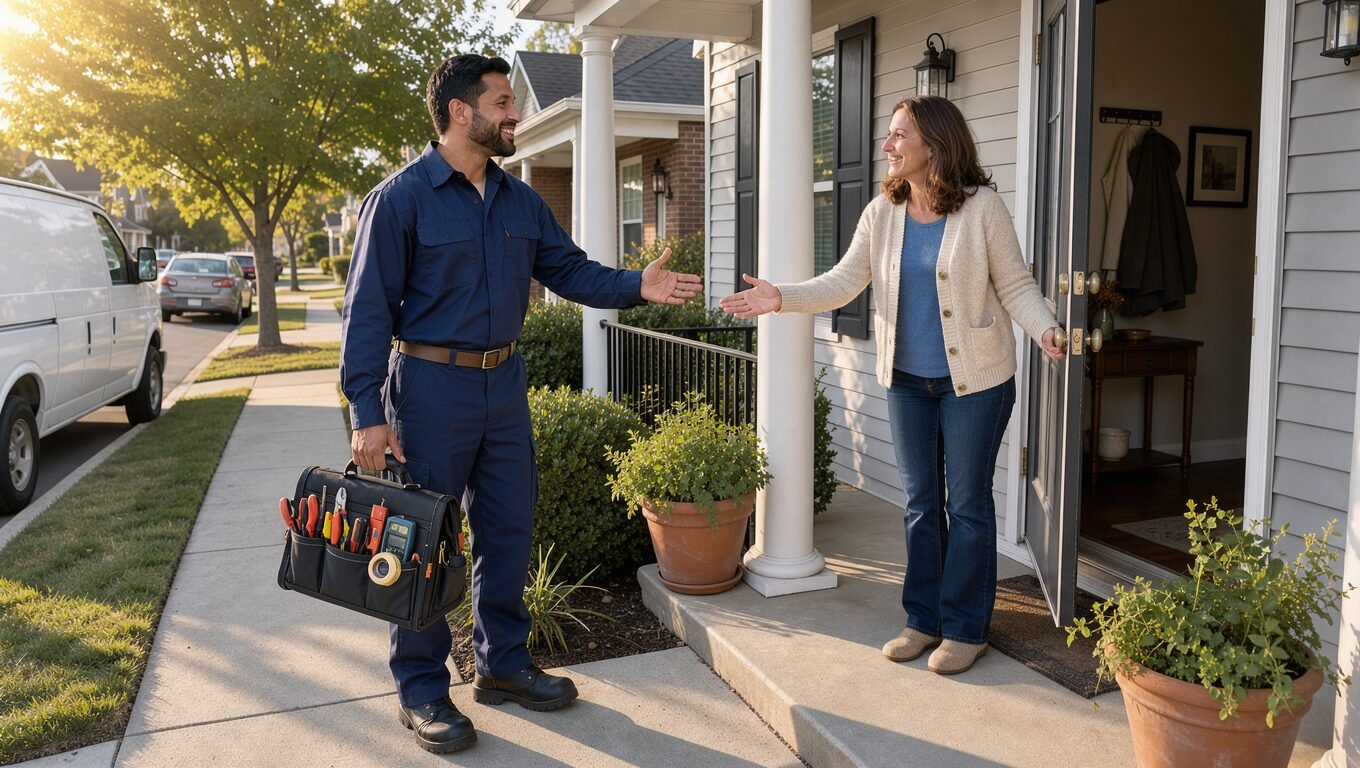
Appointment confirmations, “your technician is 20 minutes away” with a name and photo, and a review request within an hour of a completed job. Reviews are the lifeblood of local search for the trades; the companies that ask every time win the map pack. Draft replies to new reviews can be prepared for you to approve.
5. Website chat that books
A chatbot on your site handles the same intake as the phone — service, address, urgency, timing — and books into the same calendar. Homeowners researching at 10 pm after the furnace quits would rather type than call; meet them there. Our chatbot guide covers what to watch for.
6. Maintenance plan and seasonal outreach
Past customers get tune-up reminders before heating and cooling seasons, filter reminders and plan renewals, personalized from the equipment on file. This is the highest-margin revenue most shops leave on the table.
Keeping it honest and compliant
- The assistant identifies itself as an assistant and hands off on request.
- Outbound messages go only to customers who have given you their number for service; include an opt-out.
- Pricing statements are limited to what you’ve approved in writing.
- Recordings are reviewed weekly for the first month and spot-checked after.
Where to start
Pull two numbers: missed calls last month and open estimates older than two weeks. Those are the first two automations, in that order. Our home services marketing team sets these up alongside your Google Business Profile and local SEO so the phone actually rings. Request a free marketing audit and we’ll include a call-coverage review.
Frequently asked questions
Can the AI dispatch technicians?
It books into your scheduling or field-service software and flags emergencies; final dispatch decisions stay with your office or on-call lead.
What if a customer describes an emergency?
Keywords like no heat, gas smell, flooding or sparking trigger immediate routing to your emergency line with the address and details.
Does this work with my field-service software?
Most major platforms integrate; where they don’t, the assistant sends structured tickets by text and email that your team enters.