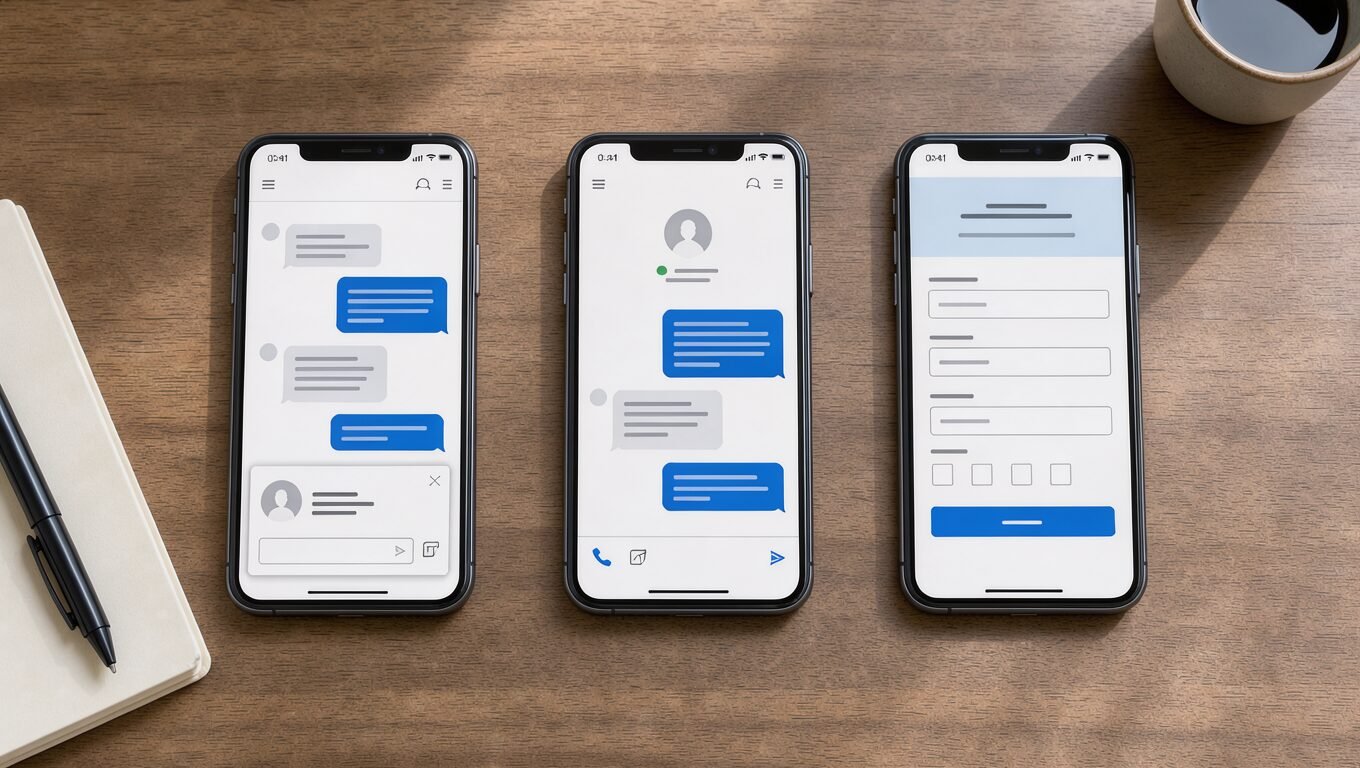
Every website needs a way for a visitor to raise a hand. The three common options — a contact form, staffed live chat and an AI chatbot — are usually presented as competitors. They aren’t. They trade off speed, lead quality, cost and staffing differently, and most small businesses should run a hybrid. Here’s the comparison we walk clients through.
The contact form
Strengths: costs nothing, works 24/7, captures structured information, filters out people who aren’t serious enough to type a paragraph.
Weaknesses: the visitor waits — often hours or days — and conversion suffers: industry studies consistently show lead-to-contact rates fall sharply once response time passes an hour. Forms also attract spam unless protected (we use Turnstile, honeypots and token checks on ours).
Best for: considered purchases, B2B inquiries, requests that need documents, and as the fallback behind every other channel.

Staffed live chat
Strengths: a real person, real judgment, the highest trust and the best conversion on complex or high-ticket questions.
Weaknesses: somebody has to be there. Live chat left unanswered for three minutes converts worse than no chat at all — the visitor feels ignored. Coverage after hours and at lunch is where it fails, and staffing it properly costs more than most small businesses expect.
Best for: businesses with a front-desk or sales team already at a screen during business hours, and sales cycles where a conversation changes the outcome.
The AI chatbot
Strengths: instant, always on, handles many conversations at once, answers routine questions in any language, and captures a lead with context attached. Done well, it qualifies before a human ever spends time.
Weaknesses: it can be wrong if it isn’t grounded in your content, it needs guardrails and monitoring, and some visitors simply want a person. We covered the failure modes in our chatbot guide.
Best for: repetitive questions, after-hours coverage, appointment and quote intake, and any site with enough traffic that someone is always on it.
Side by side
| Factor | Contact form | Live chat | AI chatbot |
|---|---|---|---|
| Response time | Hours to days | Seconds (when staffed) | Seconds, always |
| After-hours coverage | Captures only | None without staff | Full |
| Lead quality | High intent, low volume | High, with judgment | Medium-high if it qualifies |
| Staffing | Follow-up only | Dedicated attention | Weekly review |
| Running cost | Minimal | Highest | Low to moderate |
| Risk | Slow follow-up, spam | Unanswered chats | Wrong answers without guardrails |

The hybrid we recommend
- AI chatbot first contact, always on. It answers routine questions, qualifies and books. Every conversation offers a way to reach a person.
- Live handoff during business hours when the bot detects a sales conversation or the visitor asks for a human — your team takes over in the same window.
- Contact form as the structured fallback for documents, detailed requests and visitors who prefer it — with instant automated acknowledgment and a same-day follow-up rule.
- Phone visible everywhere, answered by a person or an AI receptionist so no channel dead-ends.
How to decide for your business
Count last month’s inquiries by channel and the average time to first reply. If replies routinely take hours, a chatbot pays back quickly. If your team is at a screen and the sale depends on nuance, add live chat during hours. If most inquiries arrive by phone, fix the phone first. We measure this in a free marketing audit and recommend the mix based on your numbers, not ours.
Frequently asked questions
Does adding a chatbot hurt the number of form submissions?
Form volume often drops while total leads rise, because people get answers and book in the chat instead of filling a form and waiting.
Can live chat and an AI chatbot run in the same widget?
Yes — the standard setup is the AI handling first contact and a person taking over in the same conversation when available.
Which option is best for after-hours?
An AI chatbot, backed by a form and an AI receptionist on the phone — the three together mean no inquiry waits until morning without acknowledgment.