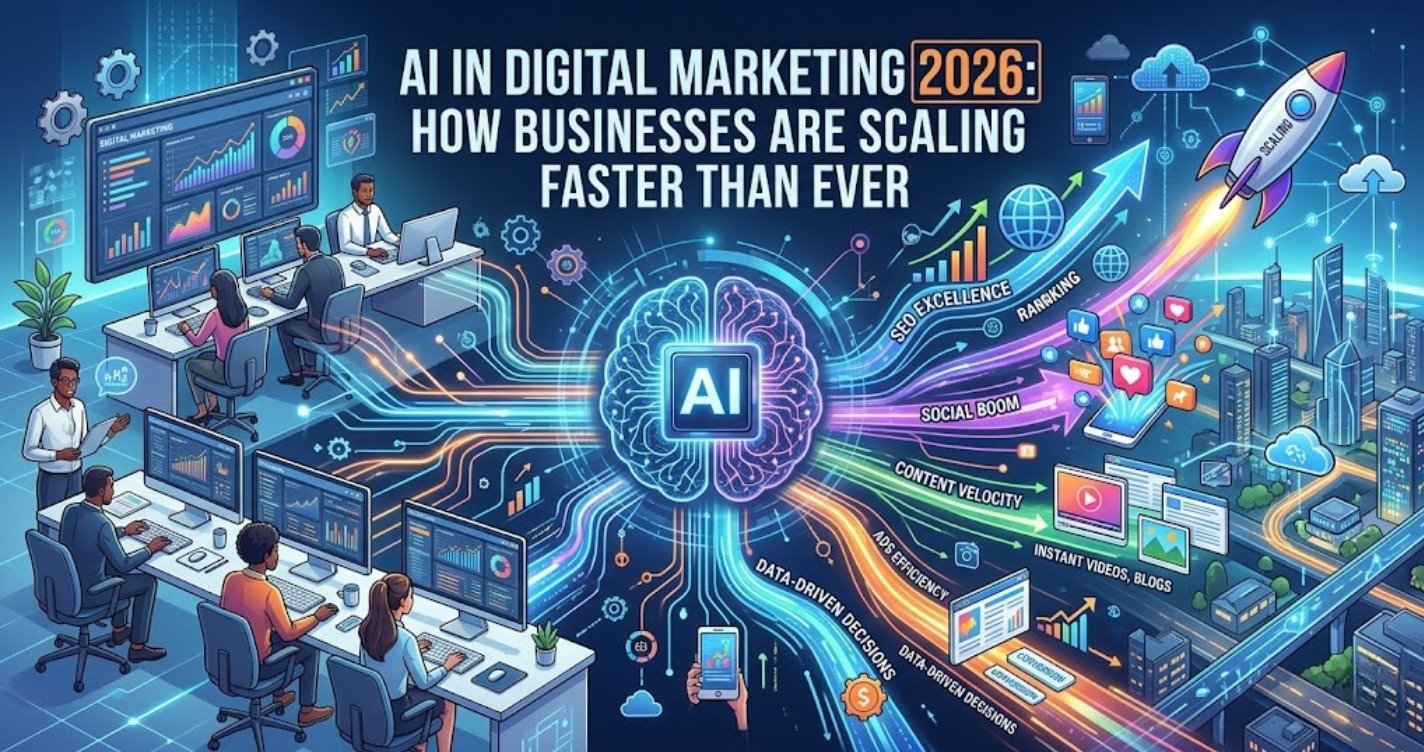
Artificial Intelligence is no longer a future concept—it’s the driving force behind modern digital marketing.
In 2026, businesses that leverage AI are:
- Scaling faster
- Reducing costs
- Increasing conversions
While those who ignore it are falling behind.
From content creation to customer targeting, AI is transforming how brands connect with their audience.
In this guide, we break down how AI is reshaping digital marketing—and how you can use it effectively with ChicagoTechSolutions.
What Is AI in Digital Marketing?
AI in digital marketing refers to using intelligent systems to:
- Analyze data
- Automate tasks
- Personalize user experiences
- Optimize campaigns
Platforms like Google Ads and Meta Ads Manager already use AI to improve targeting and performance.
Why AI Is Dominating Marketing in 2026
1. Data-Driven Decisions
AI processes massive amounts of data instantly.
👉 This helps businesses make smarter, faster decisions.
2. Personalization at Scale
Users expect content tailored to them.
AI enables:
- Personalized recommendations
- Dynamic content
- Targeted messaging
3. Automation & Efficiency
AI automates repetitive tasks like:
- Email campaigns
- Ad optimization
- Customer responses
Top AI Trends in Digital Marketing
1. AI-Powered Content Creation
AI tools help generate:
- Blog content
- Ad copy
- Social media posts
❌ Mistakes to Avoid:
- Publishing raw AI content
- Lack of human editing
✅ Key Takeaway:
Use AI for speed, but refine content for quality and authenticity.
2. Smart Chatbots & Customer Support
AI chatbots provide:
- Instant responses
- 24/7 support
- Better user experience
❌ Mistakes:
- Robotic responses
- Poor chatbot design
✅ Takeaway:
Design chatbots to feel human and helpful.
3. Predictive Analytics
AI predicts:
- Customer behavior
- Purchase intent
- Campaign performance
👉 This allows proactive marketing strategies.
4. AI in Paid Advertising
Platforms like Google Ads use AI for:
- Audience targeting
- Budget optimization
- Ad performance improvement
❌ Mistakes:
- Not monitoring AI campaigns
- Blind automation
✅ Takeaway:
Combine AI automation with human oversight.
5. Voice & Visual Search Optimization
Search behavior is changing:
- Voice queries
- Image-based searches
❌ Mistakes:
- Ignoring new search formats
✅ Takeaway:
Optimize for conversational and visual content.
6. Hyper-Personalized Email Marketing
AI helps create:
- Personalized email content
- Automated workflows
- Behavior-based campaigns
Common Mistakes Businesses Make with AI
🚫 Avoid These:
- Over-relying on automation
- Ignoring human creativity
- Using AI without strategy
- Publishing low-quality content
- Not analyzing performance
How to Use AI Effectively in 2026
Step-by-Step Approach:
- Define clear marketing goals
- Use AI tools for data and automation
- Combine AI with human creativity
- Continuously monitor and optimize
- Focus on user experience
How ChicagoTechSolutions Uses AI for Growth
🚀 AI-Driven Marketing Strategies
Helping businesses scale faster with intelligent solutions.
📊 Data-Based Decision Making
Using analytics and AI insights to improve performance.
🎯 Personalized Campaigns
Delivering the right message to the right audience.
⚙️ Automation with Control
Efficient systems with human oversight for best results.
🤝 End-to-End Digital Solutions
From strategy to execution—everything optimized for growth.
FAQ’s
How is AI used in digital marketing?
AI is used for automation, personalization, data analysis, and campaign optimization.
Is AI replacing digital marketers?
No, it enhances their capabilities but still requires human strategy and creativity.
What are the benefits of AI in marketing?
Better targeting, faster execution, improved ROI, and personalization.
Can small businesses use AI?
Yes, AI tools are now accessible and affordable for all business sizes.
What is the biggest AI trend in 2026?
Hyper-personalization and predictive analytics.