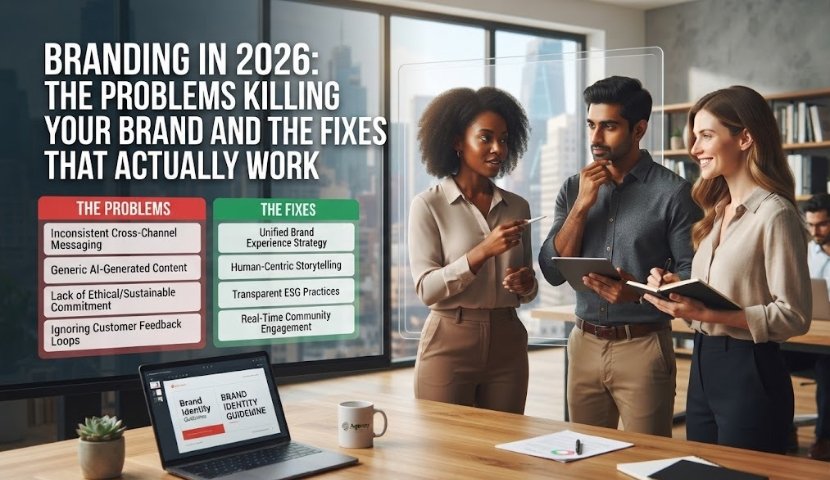
Branding used to be about consistency — same logo, same colors, same tagline, everywhere. That’s still true, but it’s no longer enough. In 2026, the brands losing ground aren’t the ones with ugly logos. They’re the ones invisible to AI, indistinguishable from competitors, and emotionally flat in a feed full of noise.
Here’s a breakdown of the branding problems businesses are actually running into this year — and the specific, low-lift fixes that are working.
Problem #1: You’re Invisible to AI Search
Search has quietly changed. Customers aren’t just Googling anymore — they’re asking ChatGPT, Perplexity, and Gemini what to buy, who to trust, and which brands are worth considering. If your brand isn’t showing up clearly in those AI-generated answers, you’re losing customers before they ever hit your website.
This matters because AI agents are increasingly recommending, filtering, and even choosing products on someone’s behalf. Ranking #1 on Google isn’t the finish line anymore — being seen as credible and trustworthy by the AI itself is.
The fix:
- Publish clear, structured information (specs, pricing, FAQs) that AI tools can easily parse and cite
- Keep your Google Business Profile, website, and reviews consistent — AI cross-checks details across sources before recommending you
- Earn mentions on third-party sites and directories; AI weighs outside validation more heavily than your own marketing copy
Problem #2: Your Brand Identity Feels Flat and Static
A single rigid logo and a set of unchanging visuals used to be the gold standard. But with screens now the primary way people interact with brands, static assets struggle to hold attention. The shift in 2026 is toward “motion-first” identity — brands treating movement as seriously as color palettes and typography.
The fix:
- Create a simple animated or kinetic version of your logo for video, app, and social use
- Build an adaptive system: a consistent foundation with flexible, platform-specific surface visuals
- Add a short branded animation to the front of your Reels or TikTok content instead of a static title card
Problem #3: One-Size-Fits-All Messaging Is Costing You Customers
Personalization has gone from a nice bonus to an expectation. Most consumers now expect it, and a large share say they get actively frustrated when a brand doesn’t deliver it — frustration that leads directly to lost business, not just a weaker impression.
The fix:
- Segment your email and ad messaging by past purchase behavior or browsing activity
- Show different homepage or landing page content to new visitors versus returning customers
- Personalize timing, not just content — a returning customer shouldn’t get the same generic weekly blast as a first-time visitor
Problem #4: Your Content Feels Too Polished, Too AI-Generated
As AI-generated content floods every feed, audiences are noticing — and pulling toward brands that feel handmade instead. Texture, grain, scrapbook-style layouts, and visible imperfections are back, not as a nostalgia trend but as a trust signal that a real human is behind the brand.
The fix:
- Mix in raw, textured, or DIY-style visuals instead of relying only on polished AI-generated graphics
- Show real people and real behind-the-scenes moments, not just product shots
- Use AI to speed up production, but always have a human pass for the final “does this feel like us” check
Problem #5: No Clear Stance on Values
Purpose-driven branding has moved from an optional differentiator to a baseline expectation, especially among younger consumers whose buying decisions are increasingly shaped by the causes and values a brand supports.
The fix:
- Pick one or two causes that genuinely connect to your business — not a scattershot list that feels performative
- Show real actions and outcomes, not just a mission statement on your About page
- Make the impact visible: a number, a story, or a local example customers can actually see