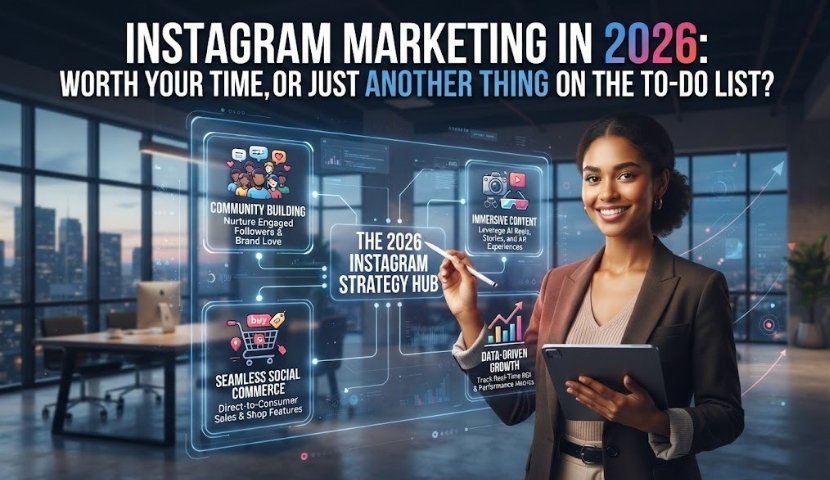
We hear a version of this question almost every week from Chicagoland business owners: “Do I actually need to be doing Instagram, or is that just something my competitors are doing to look busy?” Fair question. Nobody running a restaurant, a home care agency, or an HVAC company has spare hours to burn on a platform that might not do anything for the business. So let’s actually answer it — honestly, not with a canned “yes, everyone needs social media” pep talk.
Short version: for most local businesses, yes, it’s worth it — but only if you’re doing the version of Instagram that actually works in 2026, which looks pretty different from what worked even two years ago.
The Instagram of 2026 Isn’t What You Think It Is
If your mental picture of Instagram marketing is a perfectly styled grid of professional photos, you’re picturing 2019. That version of Instagram is basically dead. What’s replaced it is rawer, faster, and honestly a lot more doable for a small business with no marketing department.
Here’s what’s actually driving results right now:
Reels are how you get discovered — everything else is just for people who already follow you. A polished grid post mostly reaches your existing followers. Reels are what get pushed to people who’ve never heard of you. If you’re not making short video, you’re essentially invisible to new customers on the platform, no matter how nice your feed looks.
Authentic beats polished, consistently. Audiences are tired of anything that feels like an ad. A shaky 20-second video of your team setting up for a busy Friday night, or a caregiver explaining what a first visit looks like, will often outperform an expensive product shoot. People can sense effort that’s actually genuine versus effort that’s trying to sell them something, and they trust the first one a lot more.
Consistency beats cinematic quality. You don’t need a videographer. You need to actually post — regularly, even if it’s simple. Businesses posting useful, low-production short videos on a steady schedule are quietly outperforming the ones chasing a “perfect” post once a month.
Social commerce and reviews-as-content are becoming real revenue drivers. For businesses that sell products or take bookings, Instagram’s shopping and booking tools are turning into an actual sales channel, not just a brand-awareness one. And customer-generated content — a happy customer’s own video or photo — tends to convert better than anything a business creates about itself, because it feels real.
Small, engaged local influencers outperform big flashy ones. You don’t need a celebrity partnership. A well-connected local food blogger or a neighborhood mom with a genuinely engaged following will usually get you a better return than one expensive influencer post that reaches a bunch of people who’ll never actually visit your business.
So Should Your Business Be Doing This?
Here’s the honest answer: it depends less on your industry and more on whether you can commit to doing it right, or whether you’re better off putting that energy somewhere else for now.
If you run a restaurant, café, or anything visual and local, Instagram is close to essential in 2026 — it’s often the first place someone checks before deciding to walk in, and Reels are genuinely one of the best discovery tools available to a small local business right now. If you run something like a home care agency, HVAC company, or law firm, Instagram matters more for trust and humanizing your business than for direct discovery — think behind-the-scenes content, team introductions, and real client stories rather than sales pitches.
What doesn’t make sense is doing Instagram halfway — posting inconsistently, chasing trends without a strategy, and wondering why it’s not generating anything. That’s how it becomes a time sink instead of a growth channel.
Where Chicago Tech Solutions Comes In
This is exactly the kind of thing we help Chicagoland businesses sort out — not just whether to be on Instagram, but how to do it in a way that actually fits your business, your time, and your budget, tied into the rest of your marketing instead of sitting off on its own. If you’re not sure whether it’s worth your time, that’s a great question to bring to your free growth plan. We’ll give you a straight answer, even if that answer is “not yet.”
Frequently Asked Questions
Does my small business really need to be on Instagram in 2026?
For most locally-facing businesses, yes — especially anything visual like restaurants and cafés. For service businesses like home care or HVAC, it’s less about direct discovery and more about building trust through authentic, consistent content.
What kind of content actually works on Instagram right now?
Short, authentic Reels — behind-the-scenes moments, real team and customer stories, low-production but consistent posting. Highly polished, ad-like content tends to underperform compared to genuine, relatable video.
Do I need professional equipment to make good Reels?
No. A phone and consistency beat expensive production value. The most successful small business content in 2026 is intentionally low-lift and authentic, not cinematic.
How often should a small business post on Instagram?
Consistency matters more than frequency for its own sake. A steady, sustainable rhythm you can actually maintain — even a few times a week — outperforms sporadic bursts of “perfect” content.
Should I work with influencers to grow on Instagram?
Often yes, but smaller, locally-relevant micro-influencers tend to deliver a better return than one expensive influencer with a broad, less-engaged audience.