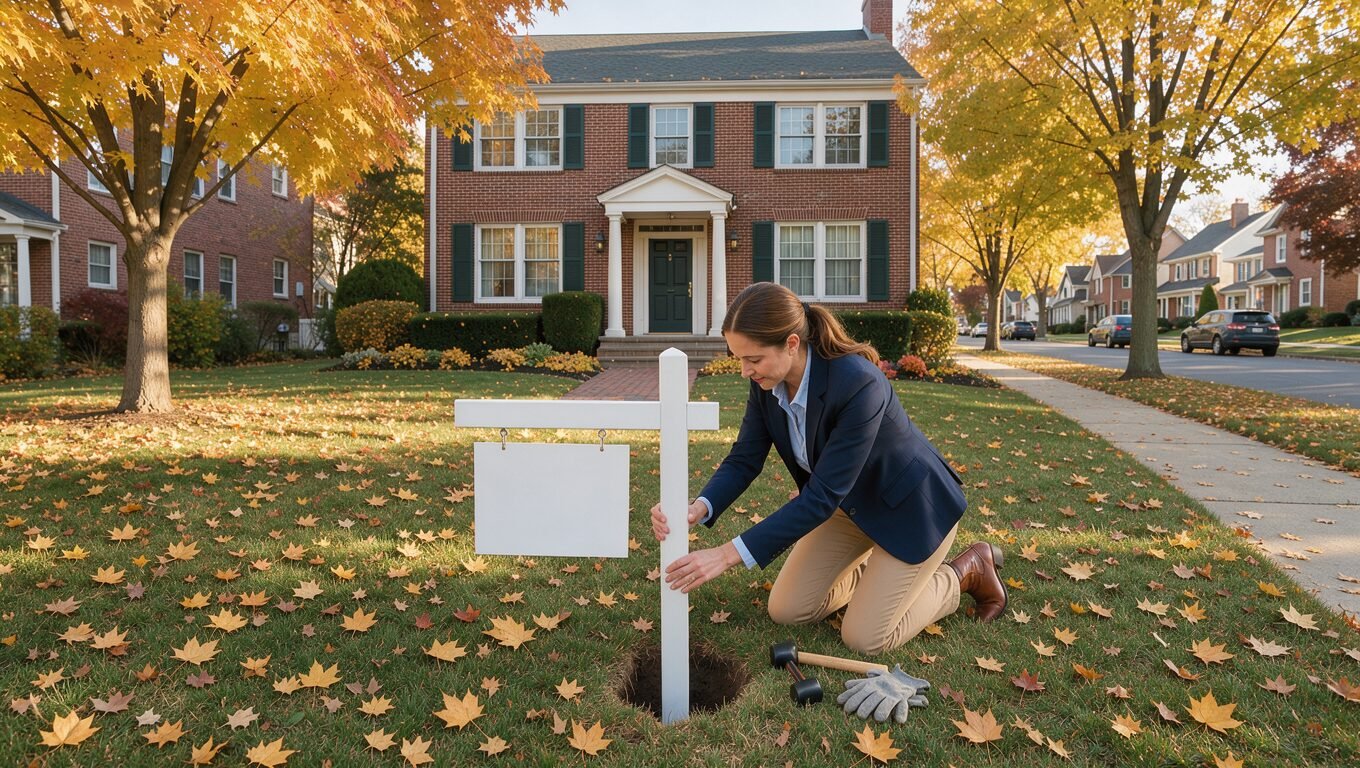
In Winnetka, a listing can be a multi-million-dollar product. The print that represents it — the postcard that lands on a neighbor’s kitchen counter, the booklet a buyer carries out of an open house, the sign on Sheridan Road — has to look like it belongs at that price point. Thin paper and template layouts cost listings.
Here’s the print toolkit we build for North Shore agents and brokerages, and the specs that make it look expensive without being wasteful.
The core pieces
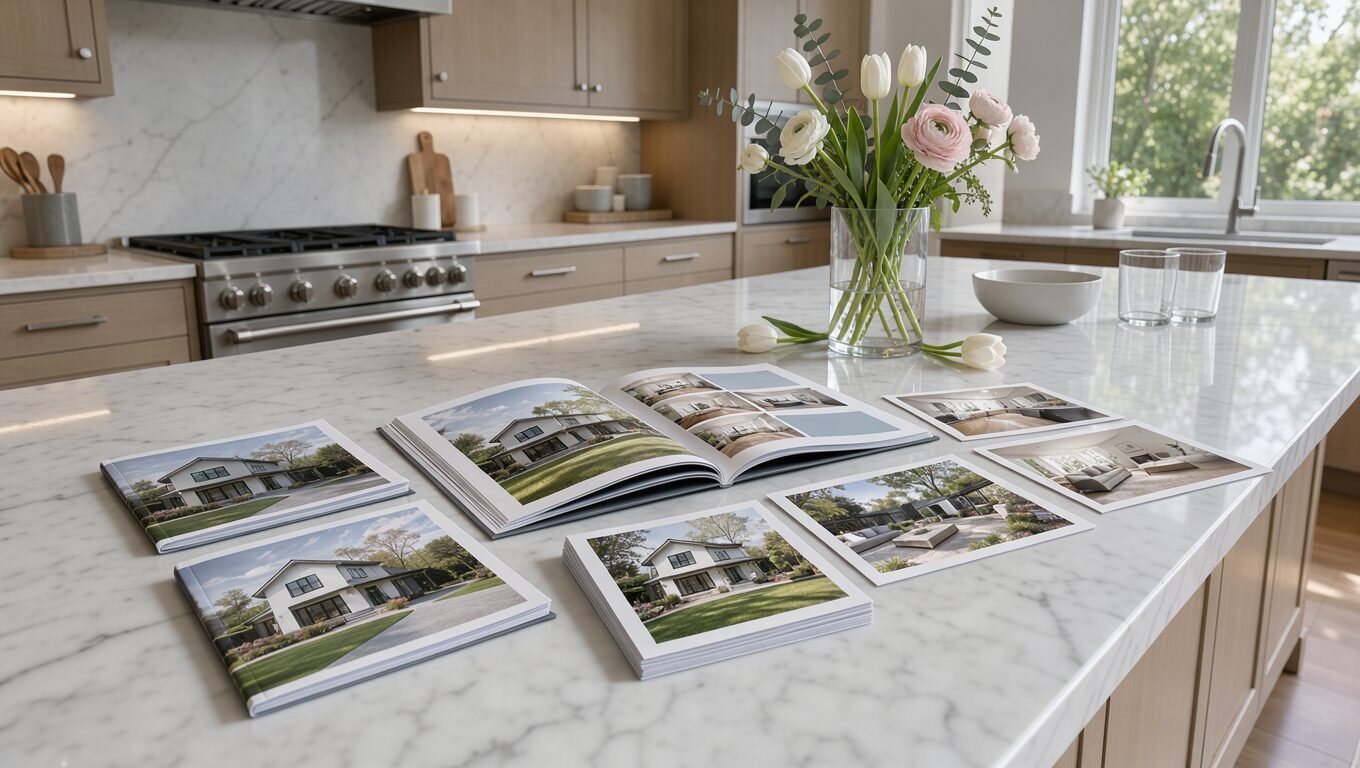
- Just-listed / just-sold postcards. The workhorse of geographic farming. Oversized (6 × 9 or 6.5 × 9), heavy stock, one photo that stops the hand, your face and phone on the back.
- Listing brochure or book. For homes above the neighborhood median, an 8- to 16-page booklet with professional photography, floor plans, school and commute facts, and the story of the home.
- Yard and directional signs. Your brand’s typography and colors on a post sign, riders for “Open Sunday,” and corner directionals that match.
- Open-house kit. Welcome sign, feature cards for rooms, a one-page fact sheet, a sign-in method, and a leave-behind card.
- Agent brochure and business card. Your credentials, recent sales and the neighborhoods you specialize in — the piece that answers “why you?”
Direct mail that gets read
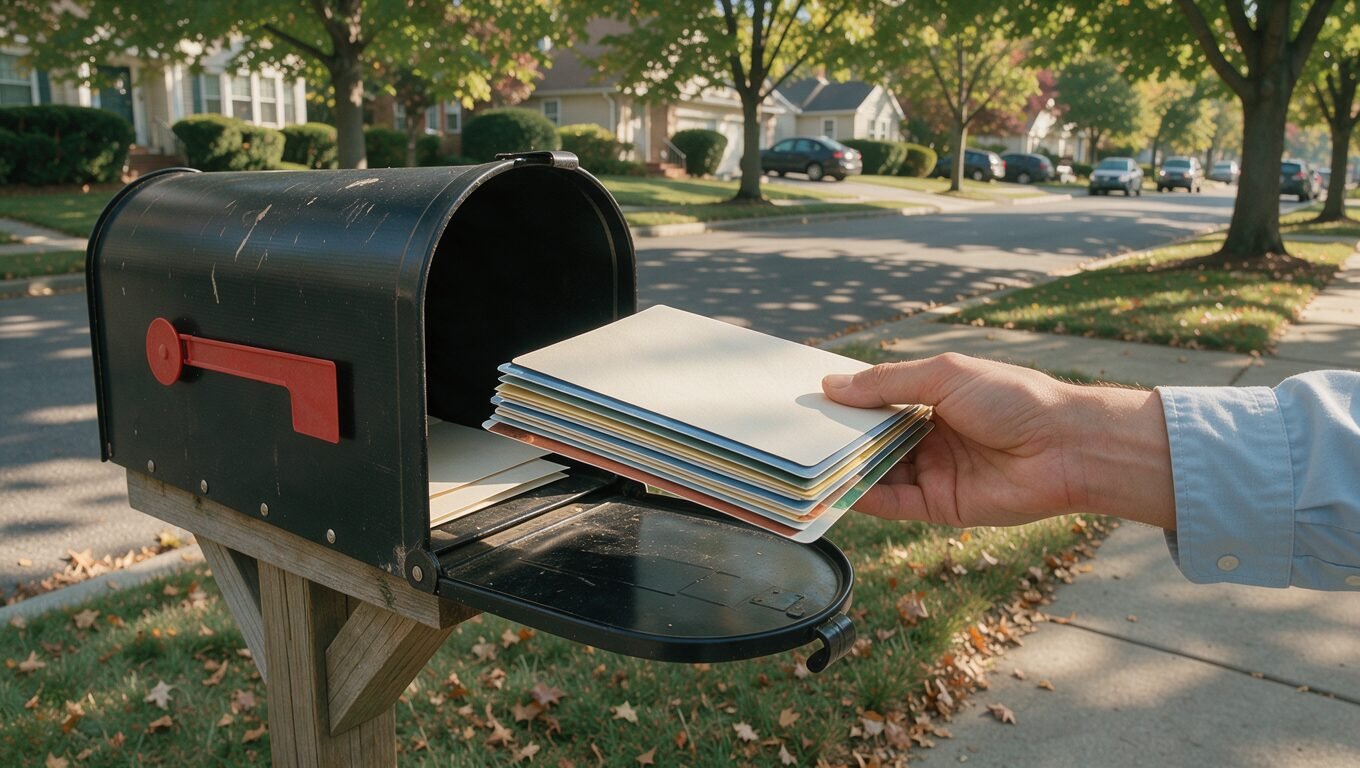
Farming works when it is consistent: the same streets, every four to six weeks, with content that is useful to a homeowner who is not selling yet — recent sales with prices, market snapshots, a seasonal maintenance tip, an invitation to a neighborhood event. Pure “I sold your neighbor’s house” cards get skimmed; useful cards get kept.
Every Door Direct Mail (EDDM) reaches whole carrier routes at a reduced postage rate without a mailing list; targeted lists reach specific home values or ownership lengths. We design to postal specs so the card isn’t rejected at the post office, and we size pieces to the postage tier you actually want to pay. For a deeper look, read our guide to direct mail postcards and EDDM.
Photography sets the ceiling
No layout rescues weak photos. Twilight exteriors, wide interiors shot with proper lighting, and a drone shot for lots and lake proximity are standard at Winnetka price points. Build the print pieces around the three best images, not all forty.
Print specs that keep it looking premium
- Postcards: 16 pt stock minimum, matte or soft-touch coating on the photo side, uncoated address side for the mail carrier’s barcode.
- Booklets: 100 lb silk text inside, 100 lb cover outside, saddle-stitched up to 16 pages.
- Signs: aluminum composite or coroplast for temporary directionals; double-sided; specify your Pantones for vinyl.
- Files: 0.125-inch bleed, CMYK, 300 dpi, PDF/X-1a, postal clear zones respected on mail pieces.
Brand consistency across print and digital
The listing book, the yard sign, your website, your Zillow profile and your Instagram should look like one brand. We build the system once — logo, palette, typography, templates — and apply it across every piece; see brand collateral and branding. Agents who also want more online leads can start with a free marketing audit of their current presence.
Frequently asked questions
What size postcard works best for real estate farming?
Oversized 6 × 9 or 6.5 × 9 cards on heavy stock stand out in the mail stack; standard 4 × 6 cards are cheaper but easy to miss.
How often should I mail a farm area?
Every four to six weeks, consistently, for at least a year. Sporadic mailings rarely produce listings.
Do you handle printing and mailing or only design?
We design, prepare print-ready and postal-compliant files, and coordinate printing and mailing through our print partners so you approve a proof and we handle the rest.