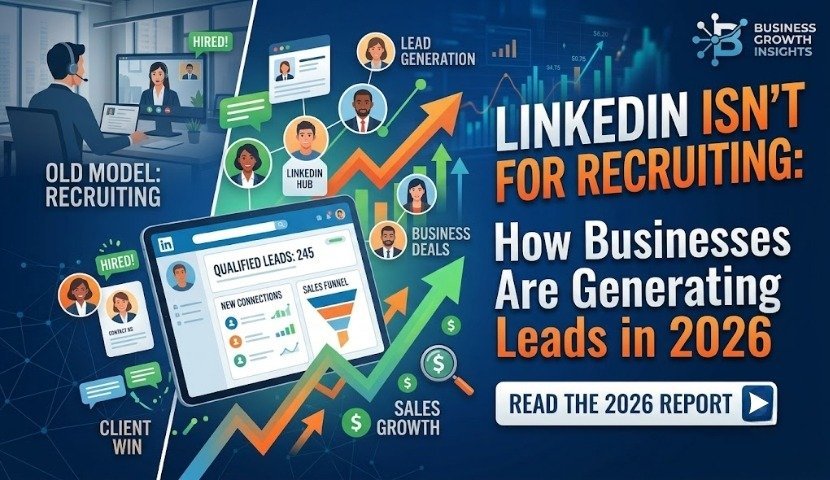
For years, many business owners viewed LinkedIn as a platform primarily designed for job seekers, recruiters, and corporate hiring teams.
While recruiting remains an important part of the platform, LinkedIn has transformed into something much larger: one of the most effective B2B lead generation channels available today.
In 2026, decision-makers, business owners, executives, consultants, and industry leaders are spending more time on LinkedIn than ever before. They’re not just looking for employees—they’re researching vendors, evaluating service providers, seeking expert insights, and building professional relationships.
Businesses that understand this shift are generating qualified leads, strengthening brand authority, and creating opportunities that traditional marketing channels often struggle to deliver.
The question is no longer whether your business should be on LinkedIn.
The question is whether you’re using it strategically.
Why LinkedIn Has Become a Lead Generation Platform
Unlike many social media platforms that focus primarily on entertainment, LinkedIn is built around professional intent.
Users visit LinkedIn to:
- Learn about industry trends
- Explore solutions to business challenges
- Connect with experts
- Research companies
- Evaluate potential partners
- Discover service providers
This professional mindset creates an environment where meaningful business conversations can occur naturally.
For B2B organizations, this audience is incredibly valuable.
Decision-Makers Are Already There
One of LinkedIn’s greatest advantages is access to decision-makers.
Depending on your industry, your target audience may include:
- CEOs
- Business owners
- Operations managers
- Marketing directors
- Facility managers
- Purchasing teams
- Executive leadership
These are often the individuals responsible for approving budgets and selecting vendors.
Instead of trying to interrupt them with advertisements, LinkedIn allows businesses to build visibility and trust over time.
Content Builds Credibility
Modern buyers conduct research before making purchasing decisions.
Many prospects will review your LinkedIn presence before contacting your business.
They want to know:
- Are you knowledgeable?
- Do you understand industry challenges?
- Can you provide value?
- Are you active and credible?
Content helps answer these questions.
Examples include:
- Industry insights
- Project highlights
- Case studies
- Business lessons
- Market trends
- Educational content
Consistent content positions your business as a trusted resource rather than simply another vendor.
Employee Advocacy Amplifies Reach
Many companies underestimate the value of their employees’ LinkedIn networks.
When team members share company content, engage with posts, and contribute insights, they significantly increase visibility.
Employee advocacy often generates:
- Greater organic reach
- Higher engagement
- Stronger trust
- More referral opportunities
People tend to engage with people before they engage with brands.
LinkedIn Supports Long Sales Cycles
Many B2B purchasing decisions take weeks or months.
Unlike channels focused on immediate conversions, LinkedIn helps businesses remain visible throughout the decision-making process.
Prospects may interact with your content multiple times before reaching out.
These repeated touchpoints build familiarity and trust.
When a need arises, your business is already top-of-mind.
Thought Leadership Creates Competitive Advantages
In competitive industries, expertise often becomes the differentiator.
LinkedIn provides opportunities to demonstrate thought leadership through:
- Articles
- Videos
- Industry commentary
- Client success stories
- Educational posts
Businesses that consistently share valuable insights often gain credibility that competitors struggle to replicate.
The Businesses Winning on LinkedIn in 2026
The companies generating leads on LinkedIn are not necessarily posting viral content.
Instead, they focus on:
- Consistency
- Relevance
- Expertise
- Relationship building
- Authentic engagement
Their goal is not simply to accumulate followers.
Their goal is to earn trust.
Final Thoughts
LinkedIn is no longer just a recruiting platform.
It has become a powerful environment for building authority, generating leads, and nurturing business relationships.
Organizations that invest in LinkedIn strategically often discover opportunities that extend far beyond hiring.
At Chicago Tech Solutions, we help businesses develop LinkedIn marketing strategies, content plans, branding initiatives, and digital marketing campaigns that drive meaningful business growth.
Frequently Asked Questions
Is LinkedIn effective for lead generation?
Yes. LinkedIn is one of the most effective platforms for B2B lead generation because it connects businesses directly with professional decision-makers.
What type of content performs best on LinkedIn?
Educational insights, industry trends, case studies, business lessons, and thought leadership content often perform well.
Do small businesses benefit from LinkedIn?
Absolutely. LinkedIn allows small businesses to build credibility and connect with prospects regardless of company size.
How often should businesses post on LinkedIn?
Consistency matters more than frequency. Many businesses see results posting several times per week.
Is LinkedIn better than other social platforms for B2B marketing?
For many B2B organizations, LinkedIn provides access to highly targeted professional audiences that other platforms may not offer.